Last update: 2 weeks ago
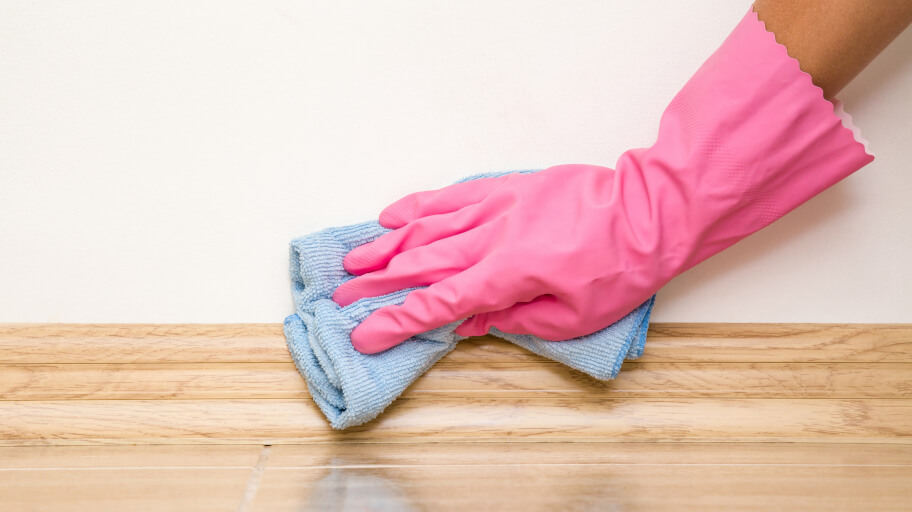
The best way to clean skirting boards depends on what you’re dealing with — but for most homes, it comes down to two core methods: a vacuum or duster pass for regular dust removal (no bending required), and a dry-wet-dry clean with the right skirting board cleaner for anything more stubborn. Both are straightforward once you know which one fits your boards and how dirty they actually are.
Timber and vinyl skirting boards
Skirting boards, also called baseboards, can be made of two materials – wood and vinyl. Both materials can look great, but they’re cleaned quite differently, so it’s worth knowing which you have before you reach for a cleaner.
| Timber | Vinyl | |
|---|---|---|
| Durability | High quality but can be costly; lacquer may wear over time | Durable and affordable; common in newer builds |
| Cleaning method | Damp rag + wood cleaner; avoid excessive moisture | Dry-wet-dry method; tolerates most household cleaners |
| Safe cleaners | pH-neutral wood cleaner or dedicated timber floor cleaner | Vinegar solution, dish soap in warm water, or mild detergent |
| Avoid | Vinegar, baking soda, excess water | Abrasive scrubbers on gloss finishes |
Timber
Wooden mopboards are usually of high quality and can be costly. You shouldn’t clean wooden baseboards with just water — the lacquer may have worn off depending on the skirting’s condition, leaving the wood susceptible to damage. Use a pH-neutral wood cleaner or a dedicated timber floor cleaner rather than general-purpose detergents; these protect the surface while still lifting grime effectively. Dust them lightly first, then work over the boards with your wood cleaner and a damp rag, and finish by applying a wood conditioner to bring out the colour and give the wood a second life.
Vinyl
Vinyl ones are common in newly built buildings, and while more durable, they’re cheaper. You can clean vinyl skirting with almost any type of detergent — a few drops of dish soap in a bucket of warm water makes a reliable everyday skirting board cleaner that won’t damage the surface. If you’re a fan of green cleaning, warm water with a splash of liquid soap and a sponge will do a perfect job.
Easy ways to clean skirting boards
To prevent getting dirt on the baseboards you just cleaned, the best thing you can do is dust and vacuum the room first. You know the rule — clean from top to bottom. Baseboards should (and probably are) on the end of your cleaning checklist.
If your home is spacious and you have a lot to clean, we’d recommend kneepads to protect your knees. That said, the easiest way to clean skirting boards — especially if bending down is a problem — is to start with the no-bend method below and only get close for the stubborn spots.
How to clean skirting boards without bending down
Some people avoid cleaning the skirting boards because it involves a lot of crouching and scrubbing, which for some might result in hurting knees. If you’re one of them, here’s what you can do.
First things first, you have to remove the dust from the skirt boards. The good news is that you can do that without bending down.
What you will need:
- Vacuum cleaner
- Upholstery brush attachment
- Large feather duster with a long handle
That’s right, all you need is a vacuum cleaner and an upholstery brush attachment – the same one used for carpet cleaning. The bristles of the attachment will do a perfect job of picking up the dust accumulated on top of the skirtings.
Remember to vacuum the floor first and then the baseboards. The other way around will make the dust from the ground stick to the skirtings, rendering your cleaning efforts useless.
A convenient way to maintain your skirting boards clean is to dust them with a large feather duster. Use a long handle so you don’t have to bend down while cleaning. For the wet-wipe stage, a skirting board mop — a long-handled flat mop fitted with a damp microfibre pad — lets you wipe down the boards entirely from standing height, making the whole job genuinely hands-free from start to finish.
How to clean vinyl skirting boards
Good news: vinyl skirting boards are the easiest to clean and tolerate most household cleaners without complaint. The method that works best — and keeps them looking fresh without any fuss — is the dry-wet-dry approach.
What you will need:
- Vinegar
- Microfibre cloth
- Sponge
- Warm water
- Dust or vacuum the skirting boards
Before any liquid touches the boards, remove the dry dust first — with a duster, vacuum cleaner, or a dry cloth. Skipping this step means you’ll just be pushing grime around once the wet cloth arrives.
- Mix your cleaning solution
Pour 20 ml of white vinegar into one litre of warm water. The acidity of the vinegar lifts set-in stains and helps repel dust for the following couple of days. Alternatively, a few drops of dish soap in warm water works just as well for everyday cleaning.
- Wipe with a damp cloth or sponge
Dip your microfibre cloth or sponge into the solution, wring it out well, and work along the skirting boards. Make sure you rinse the sponge thoroughly as you go — a dirty sponge just redistributes the grime.
- Dry with a clean cloth
Finish by running a dry cloth or a second dry microfibre cloth along the boards to remove any excess moisture. This final pass is especially important if the boards sit in a room with poor ventilation.
If you really want to cut time, you can use wet wipes to clean vinyl baseboards. Just make sure that they’re biodegradable. Or call a professional to clean your boards for you.
How to clean timber skirting boards
We suggest you opt for a good wood cleaning detergent. You can use this method for baseboards that have been unkempt for decades.
What you will need:
- Sponge
- Microfibre cloth
- Wood cleaner
- Soft toothbrush
Before you start cleaning with the wood cleaner, grab a damp rag and go over the baseboards. Removing the dust first is important — loose dirt acts as a mild abrasive, and if you scrub it straight into the surface with a sponge, it can scratch the lacquer rather than lift it. Getting rid of that top layer first means the wood cleaner can actually do its job.
After you’ve removed the top layer of dust, grab the detergent and scrub the skirting with the help of a sponge. For carved moulding profiles and tight corners where a sponge can’t reach, the soft toothbrush earns its place — work it gently along the grooves to dislodge any built-up grime without catching the finish.
Depending on the level of contamination, you may have to put some elbow grease into it. Finish by buffing the boards dry with a microfibre cloth to pick up any remaining residue and leave the surface clean rather than streaky.
How often should you clean skirting boards
Skirting boards seem to hoover up dust, pet hair, and the odd bit of everyday life much faster than we expect. Sitting right by the floor they catch the same fluff and crumbs that settle on carpets — so a regular wipe helps the whole place feel cleaner.
- A quick weekly wipe – For most homes a light wipe once a week does the trick and keeps skirting boards looking presentable. Just do a quick run with a microfibre cloth or brush along the top edge, so dust doesn’t sit there plotting its dusty comeback later in the week.
- A deeper clean every month – Even with that weekly pass skirting boards appreciate a proper clean every few weeks. Scuffs and the mysterious sticky patch from a spilt drink can slowly appear. A more careful wipe lifts the grime and keeps the paintwork looking nicely looked after.
- Homes with pets or children – If pets or small children share the house skirting boards rarely stay spotless for long. Hair drifts, muddy paw prints appear, and toys constantly bump the wall. Because their lives happen close to the floor, a quick wipe or two can save the day.
- High-traffic areas – Some spots simply gather more dirt than others. Hallways and living rooms see a steady parade of general mess. Giving the skirting boards there a quick check and wipe now and then stops that telltale dusty line from forming again.
A quick check of the skirting boards every now and then can stop dirt from building up. Once you get into the habit of giving them a quick swipe while cleaning the room, it barely feels like an extra task at all. And if the boards have been neglected for a long time and the grime has really set in, having a professional clean them once is often the most efficient starting point — after that, regular maintenance keeps them looking sharp with minimal effort.
Frequently asked questions
For vinyl skirting boards, a solution of 20 ml white vinegar per litre of warm water — or a few drops of dish soap in warm water — works reliably as an everyday skirting board cleaner. For timber skirting boards, use a pH-neutral wood cleaner or dedicated timber cleaner. Avoid vinegar or baking soda on wood, as the acidity can damage uncoated or older lacquered surfaces.
Yes — use a vacuum cleaner with an upholstery brush attachment to remove dust without bending, followed by a long-handled flat mop fitted with a damp microfibre pad for wiping. Doing both steps standing up means you rarely need to crouch at all.
After cleaning, wipe the top edge of your skirting boards with a dryer sheet. The anti-static coating repels dust and slows how quickly it settles back, reducing how often you need to clean. This works on both vinyl and painted timber boards.
Takeaways
Cleaning baseboards doesn’t require some extraordinary knowledge. It’s more of a nuisance task that has to be done.
- Give skirting boards a quick dust weekly and a deeper clean every month or two — or every three to four months if you’re consistent with regular maintenance;
- The small details make a home feel clean, so put in the time and go the extra step in cleaning your house;
- Or, you know, hire a professional cleaner to do it.
Do you need a helping hand?
Hire a professional cleaning team!