Last update: 4 months ago
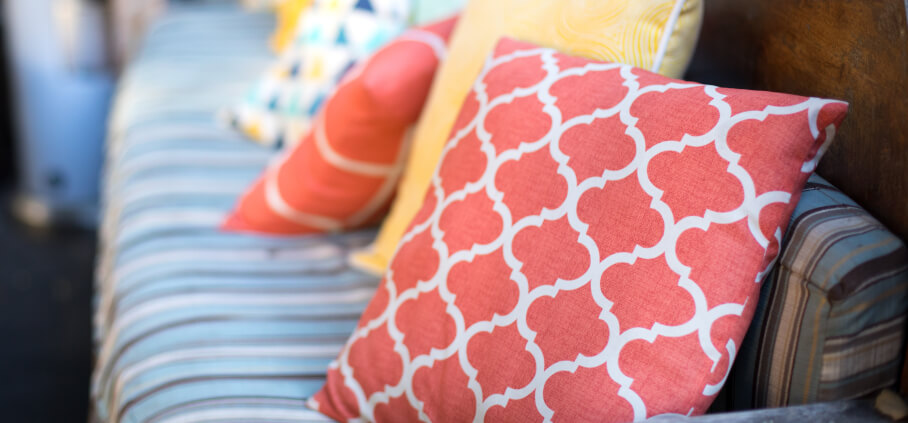
Just like any indoor furniture, garden furniture cushions also need special care. Although their fabric is more resistant to damage, UV rays and moisture, without regular cleaning and with constant exposure to the weather conditions, their protective coating can fade.
Summer gatherings and BBQ parties can leave their mark on the cushion’s fabric, too. Generally in the form of nasty and stubborn stains that can permanently change the look of your beautiful patio furniture. Deep cleaning the outdoor cushions seems challenging because of the specifics of the material, but you can still get the desired results in no time. How? Just keep reading on!
TL;DR: How to clean outdoor cushions
The best way to clean outdoor cushions is to brush off loose dirt, wash them with mild soap and warm water, rinse thoroughly, then let them dry completely before putting them back outside.
For most cushions, the process is simple:
- Brush or vacuum away dust, pollen, leaves, crumbs, and loose dirt.
- Mix warm water with a small amount of mild dish soap or detergent.
- Gently scrub the fabric using a soft brush, sponge, or microfibre cloth.
- Rinse with clean water.
- Treat mould with a vinegar and water solution if needed.
- Dry the cushions completely in a warm, breezy spot before using or storing them.
If your outdoor cushions don’t have removable covers, use less water and avoid soaking the foam inside.
Upholstery cleaning services are always available if you’re having a hard time dealing with this task.
Check the label before cleaning
Before you start scrubbing, check the care label. Annoying? Slightly. Worth it? Absolutely.
Outdoor cushions are made from different fabrics, including polyester, acrylic, canvas, olefin, and treated water-resistant or UV-resistant materials. Some covers can go in the washing machine. Others need hand cleaning only. Some can handle vinegar, while others may react badly to bleach, hot water, or strong stain removers.
The big thing to remember is this: outdoor fabric is tough, not indestructible. Harsh cleaning can fade the colour, weaken seams, strip protective coatings, or shrink removable covers so badly you’ll need a wrestling match to get them back on.
Check the label before using bleach, machine washing, tumble drying, or attacking stains with anything stronger than mild soap and water.
Best way to clean outdoor cushions step by step
This is the safest method for most outdoor cushions. It’s gentle enough for regular cleaning, but still strong enough to deal with the usual outdoor mess: dust, crumbs, pollen, sunscreen marks, rain spots, and light grime.
Here’s what you’ll need:
- Soft-bristle brush or handheld vacuum
- Bucket
- Warm water
- Mild dish soap or gentle detergent
- White vinegar
- Bicarbonate of soda
- Sponge or microfibre cloth
- Garden hose on low pressure
- Clean towels
- Sunny, breezy drying spot
Step 1: Remove loose dirt, leaves and dust
Start with the cushions dry. Shake them out, brush them down, or vacuum them with an upholstery attachment if you have one.
Pay extra attention to seams, corners, piping, buttons, and folds. That’s where dirt likes to hide. In Australia, outdoor cushions can pick up a lovely mix of dust, pollen, sand, pet hair, ash, dry leaves, and BBQ crumbs. Get that off first. Once it gets wet, it turns into a muddy paste.
Step 2: Mix a gentle cleaning solution
Fill a bucket with warm water and add a small amount of mild dish soap or gentle detergent. You don’t need half the bottle. More soap doesn’t mean a better clean. It usually just means more rinsing.
If the cushions smell musty or have light mildew, you can use white vinegar and water as a separate spot treatment. Patch test first, especially on darker or patterned fabrics.
Step 3: Scrub the fabric gently
Dip a soft brush, sponge, or microfibre cloth into the soapy water, then scrub the cushion gently. Work across the whole surface rather than attacking one dirty patch as if it personally offended you.
Use small circular motions and be a bit more careful around seams and edges. The goal is to lift the grime, not rough up the fabric or damage any protective coating.
Step 4: Rinse away the soap
Rinse the cushion with clean water. A garden hose on low pressure works well for many outdoor cushions, as long as the care label allows it.
Don’t use a pressure washer unless the manufacturer clearly says it’s safe. Too much pressure can damage seams, push water deep into the foam, and make the cushion much harder to dry.
Step 5: Blot and dry completely
Press clean towels into the cushion to remove as much water as possible. Don’t twist or wring it like a dishcloth. That can bend the cushion out of shape.
Stand the cushion upright in a warm, breezy spot so air can move around it. Flip it now and then. Check the seams, corners, and thicker areas before putting it back on the furniture.
This bit matters: don’t store outdoor cushions while they’re damp. Don’t put them back flat on the chair if they still feel cool or heavy with moisture. That’s how musty smells and mould come back.
Can you machine wash outdoor cushions?
Yes, putting the outdoor furniture cushions in the washing machine can save you lots of scrubbing, and you can be sure that the material will be rinsed inside out. However, the size of the cushions matters, as well as whether the material is suitable for machine washing or just for specialised dry cleaning.
Place just the smaller cushions in the machine only if there is enough free space for them to spin. A cool and gentle cycle will be better so as not to stretch the fabric. Any stains can be pre-treated with homemade solutions like baking soda and vinegar or a mild detergent.
If your patio chair or lounge cushions come with a zipper, then you are in luck. Since the covers are removable, you’ll have no problem taking them off and placing them in the washing machine as often as you like. As for the stuffing, you can air out the cushions somewhere sunny.
Effective stain removal techniques for outdoor cushions
Lawn furniture may be more resistant to staining, but it is not immune to it. Below you will find some of the most common types of stains you may encounter and tips on how to remove them without much effort.
How to clean the mould off outdoor cushions
Mould and mildew both favour dampness; considering the conditions outdoors, do not be surprised if you see them appear on your garden furniture. In order to get mould off the cushions, you can try a few things.
Chlorine bleach is considered a powerful mould killer, but we suggest you resort to it only in the worst-case scenario. There are natural home remedies that can help clean the mildew and mould off the outdoor cushions, too. So put on your protective gloves and choose an option:
- Vinegar and water spray
- Borax and water solution
- Vinegar, water and essential oils (thyme, tea tree, clove) blend
Let the cleaner work, and then wash and dry the cushions. The best way to prevent mould and mildew is to protect the fabric from liquids. If the cushions get wet, make sure you set them to dry right away. The same applies to for when you wash them by hand or in the washing machine.
Eliminating bird poop stains
It’s hard to predict when you may get a visit from birds, and what they leave behind can be really unpleasant to clean. Still, though, not impossible. Just prepare and do the following:
- Gently scrape off all of the excess dirt with a plastic tool.
- Spray the stain with a mixture of warm water and detergent. Any enzyme-based cleaners are also welcome to try. You can scrub a little bit with a toothbrush to get the solution deeper into the fabric.
- Then wash and rinse the outdoor furniture’s cover. If stains are still visible, you can repeat the procedure.
Getting rid of tree sap
This is a tricky one because tree sap stains get harder with time, which makes cleaning more difficult. However, there is one thing to help you effectively remove it:
- Apply a small amount of hand sanitiser with a high percentage of alcohol on the tree sap affected area.
- Rub it gently into the fabric with your fingers or a small brush.
- Leave it there for 2-5 minutes to work.
- Wipe clean with water and a cloth.
- Repeat if the stain is still visible.
Making food stains go away
Having a snack out in the garden is a real pleasure until some of it gets on the furniture’s covering. No need to worry too much! While greasy stains are very stubborn once they penetrate deeper, you can prevent soiling with a simple trick:
- As soon as you notice the stain, generously apply salt on it until it’s fully covered.
- Leave it there for 5-10 minutes until the crystals absorb the greasy substance.
- Brush the salt off and clean with warm water and soap.
- If you have a product specifically for stains, you can add a little bit, too.
- Wash and leave to dry.
How often is it best to clean your patio furniture’s cushions?
Unlike indoor furniture, the pieces in your backyard are constantly exposed to various factors that could contaminate their fabric. Frequent use does not make it any better, so just to be on the safe side, it is good to clean your outdoor seat cushions and pillows at least once or twice per week.
Vacuuming will extract the trapped dust in the fabric, and you can remove any missed stains before they can settle permanently. You can increase the number of cleaning sessions if you often enjoy time in your backyard.
There is one important thing to remember, though, before you begin. Never miss checking the cushions’ label for washing instructions. While more resistant, outdoor furniture’s fabric can still be damaged by improper cleaning or when more aggressive detergents like bleach are used. If you can’t find a label, check the manufacturer’s website for details.
How to keep outdoor furniture clean
- Vacuum at least 1-2 times per week to rid the garden furniture cushions of the accumulated dust and grime. Especially around the edges where dirt can get trapped easily.
- Look for specialised products that can make your outdoor furniture’s fabric more resistant to staining by adding an extra protective layer.
- Don’t let stains settle in! They need to be treated right away, otherwise, the risk of permanent damage increases. You can keep a homemade spray of vinegar, water and soap close by for emergencies.
- Wash the cushions several times throughout the season and deep clean the rest of the outdoor furniture before storing it inside.
- It’s not always possible to protect the outdoor chairs and lounges from the rain. Still, you have to make sure that they are left to dry as soon as possible, otherwise, mould can start to form. Do everything you can to speed up the process, from exposing them to direct sunlight to drying the covers and the stuffing separately.
Get upholstery cleaning from certified specialists!
Hire a professional cleaning team!
Conclusion
Knowing how to clean outdoor cushions isn’t complicated, but doing it the right way can make a big difference to how long they last.
A quick clean now and then is much easier than trying to rescue cushions that have been sitting outside, collecting dirt, stains, mould, and who knows what for months. Keep them clean and dry, and your outdoor furniture will look fresh for many seasons to come.