Last update: 1 month ago
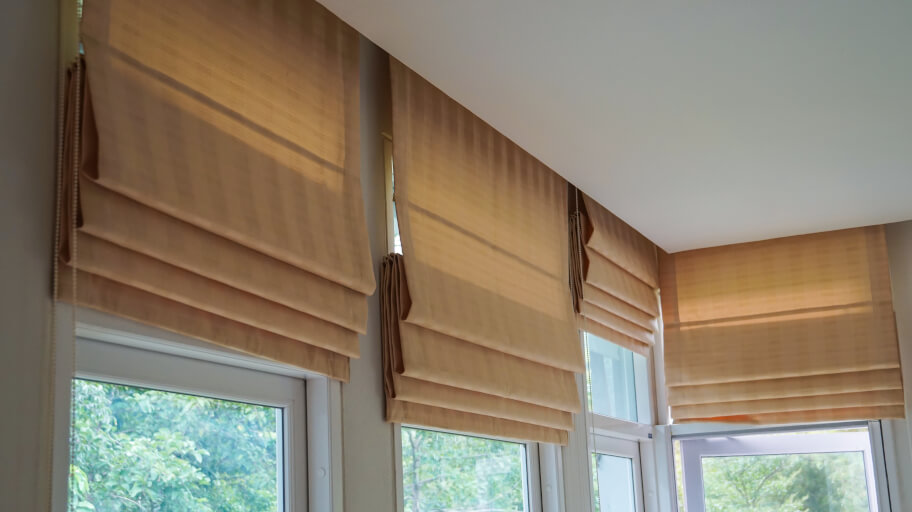
The easiest way to clean Roman blinds is to vacuum them with an upholstery attachment while they’re still hanging — no removal needed, no specialist products, and it takes less time than you’d think. Do that regularly and you’ll rarely need to go further. But when a spill happens, mould creeps in (it happens — especially in Australian bathrooms and kitchens), or the fabric just needs a proper refresh, there’s a clear escalation path: spot clean first, treat mould with a vinegar solution, and only consider machine washing or steam cleaning as a last resort.
This guide covers all of it — how to clean fabric Roman blinds, canvas Roman blinds, how to tackle mould, and when it’s genuinely time to call in the professionals. If you’ve got other types of window coverings around the house, check out our article on the subject.
How to clean Roman blinds the easy way?
The easiest way to clean Roman blinds at home is to make the job part of your regular household cleaning schedule. Preventing dirt from building up in the first place is much more effective than trying to remove it once it’s ingrained. You don’t need any specialist tools or cleaning products, there’s no need to take the blinds down and it shouldn’t take you very long either.
What you will need:
- A feather duster or microfibre cloth
- A vacuum cleaner with an upholstery attachment
- Steps (if your windows are high and you can’t reach the top of the blinds without them)
How to clean Roman Blinds at home – step by step guide
- Extend the blinds.
Fully open the blinds and hold at the bottom to keep the fabric taut.
- Brush or vacuum.
Start at the top and work across and down the blinds so that you’re not brushing dust over areas you’ve already cleaned. Use your vacuum cleaner’s upholstery attachment on a low suction setting — it picks up dust without pulling at the fabric. If the blinds are made of very delicate material, switch to a feather duster or microfibre cloth instead.
- Focus extra attention where needed.
Check for any folds in the fabric where dust may have accumulated. If the blinds have been left in one position for a long time you may see darker lines where the folds were before you extended the blinds so you’ll need to dust or brush more here. It’s also worth checking along the base of the blinds as this is another area where dust tends to accumulate.
- Assess the results.
With all the surface dust removed you can check the blinds to see if there are any stains or marks that need extra attention. If anything’s still showing, head to the stain-removal and mould sections below for the next steps.
How to remove stains from Roman blinds?
For most stains on Roman blinds, the right approach is to start gentle and escalate only if you need to: plain water first, then a mild detergent, then a specialist stain remover if the mark still won’t budge. Mould is a different beast entirely — skip to the dedicated mould section below if that’s what you’re dealing with.
To preserve the fabric and avoid causing damage with your cleaning efforts, start with the gentlest cleaning solution that might be effective.
Always check and follow the care instructions of the Roman blinds before starting any cleaning.
Tools and products to remove stains from roman blinds:
- Water
- Gentle detergents
- Stain removers
- Clean towels
- A spray bottle
- A soft brush
Method 1 – Blot with fresh water
With the blinds still in place, dampen a clean towel and gently blot the blinds, start with an unobtrusive area to make sure the water won’t leave a mark. Assuming it won’t, move onto the stain and blot that. If the stain is recent and light this may be all you need.
Method 2 – Try a little detergent
Add dish soap or a laundry detergent designed for hand-washing delicate fabrics. Blot as above. Resist the temptation to rub the fabric. If the detergent works, finish with fresh water. Keep your towel well wrung out to avoid soiling the fabric.
Method 3 – A specialist stain remover
It’s impossible to recommend a specific product as different Roman blinds are made of different fabrics and different stain removers work on different sorts of stains. For linen or cotton Roman blinds, choose an enzyme-based remover; for polyester, a mild oxygen-based product is safer.
Check the care instructions on the blind before buying the remover, mix it according to the instructions and test on a hidden part of the blind.
Once you’ve established that the product won’t damage the fabric, apply it to the stain — you can use a soft brush to work the product in if you need to. An old toothbrush is ideal. And if you’ve got roller blinds rather than Roman blinds, the stain-removal approach is a little different — our roller blinds cleaning guide covers exactly what to do.
How to clean mould off Roman blinds?
The most effective DIY treatment for mould on Roman blinds is a solution of 1 part white vinegar to 4 parts water, applied by spray bottle with the blinds taken down and laid flat. It’s a straightforward process — but skip the drying step and the mould will be back before you know it.
Mould on Roman blinds is surprisingly common in Australian homes, particularly in bathrooms, laundries, and kitchens where steam and humidity build up fast. Roman blinds trap that moisture in their fabric folds — and once mould takes hold, a regular vacuum won’t touch it.
What you’ll need:
- White vinegar
- Water
- A spray bottle
- A soft brush
- Clean towels
- Borax (optional alternative to vinegar)
Before you start: take the blinds outside and use a soft brush to gently sweep away any loose mould spores. Do this outdoors — you don’t want to scatter spores through your home.
Vinegar method: mix 1 part white vinegar to 4 parts water and pour it into a spray bottle. Lay the blinds flat and spray the solution generously over the affected area. Leave it to sit for a few minutes, then blot — don’t rub — with a clean towel. If the mould is stubborn, leave the solution for a little longer (check the care label first). Once the mould lifts, rinse the area with fresh water and blot dry.
Borax alternative: if you’d prefer not to use vinegar, dissolve half a cup of borax in two cups of hot water. Apply by spraying or dabbing on with a clean cloth or sponge, then rinse with fresh water and blot as above.
Drying is non-negotiable: hang the blinds fully extended in a well-ventilated spot — outdoors in indirect sunlight is ideal — and let them dry completely before rehanging. Putting damp blinds back up is the fastest way to invite mould straight back.
Can you wash Roman blinds in the washing machine?
In most cases, no — machine washing risks shrinking the fabric and damaging cords or stiffeners. Spot clean where possible. If machine washing is unavoidable, remove all cords, select a delicate cold-water cycle, and air dry flat.
It’s much better to clean blinds regularly so that they never get dirty enough to need machine washing — but if you must use the washer, remove all cords first, use a delicate cycle with cold water, and don’t spin or tumble dry. Hang the blinds to dry naturally, fully extended, so they keep their shape.
Can you steam-clean Roman blinds?
Steam cleaning is an option only for Roman blinds whose care label explicitly permits it — and only if spot cleaning and hand-washing have already failed. Use the lowest temperature setting.
As with machine washing, it’s better to avoid steam cleaning if possible but if you must, stand well back and work quickly along the blinds to avoid overheating any one spot.
If you’re worried you might damage the blinds this might be the time to call in professional upholstery cleaners who can steam or dry clean your Roman blinds for you.
Frequently asked questions
Dust or vacuum every 2–4 weeks to stop build-up becoming a problem. Spot-clean any stains as soon as they occur — fresh marks are always easier to lift than dried-in ones. In humid rooms like bathrooms or kitchens, do a mould-check every six months even if nothing looks wrong yet.
Yes — routine dusting and spot cleaning can both be done in place with the blinds hanging. Only mould treatment (which requires the blinds to be laid flat so the solution can work properly) and machine washing require you to take them down first.
Hang them fully extended in a well-ventilated area or outdoors in indirect sunlight. Never tumble dry — heat can shrink the fabric or warp the stiffening rods inside the folds. Make sure they’re completely dry before rehanging to prevent mould from forming.
Need some expert help to get your Roman blinds clean?
Contact Fantastic Cleaners or book your appointment online today.
Takeaways
- Frequent dusting or gentle vacuum cleaning is the best way to clean Roman blinds;
- Water-based spot cleaning is possible, avoid soiling the fabric and follow care instructions;
- For mould, a 1:4 white vinegar-to-water spray is the most effective DIY treatment — ensure blinds are completely dry before rehanging.