Last update: 5 days ago
Let’s be honest – keeping an oven clean can feel like a never-ending battle. From baked-on splatters to stubborn grease, it often seems like those stains are there to stay. Commercial cleaners promise a quick fix but come with their own set of headaches – strong chemical smells, skin-irritating formulas, and the need to ventilate the kitchen like you’re preparing for a science experiment.
If you’re ready to tackle grime in a way that’s gentle on your hands, budget, and the environment, this guide shows you how to make an effective natural oven cleaner using ingredients you likely already have in your pantry. This natural oven cleaner uses baking soda, white vinegar, and lemon juice to break down baked-on grease and burnt residue without harsh chemicals — it costs under $2 to make and is safe for households with children, pets, and anyone with asthma or sensitive skin.
Natural Oven Cleaner Recipe: What You’ll Need
If the thought of harsh chemical fumes makes you cringe, don’t worry! This easy oven cleaner DIY method will transform your oven using simple, natural ingredients.
What you will need:
Tools:
- Protective gloves and eyewear
- 1 to 2 microfiber cloths
- Scouring sponge
- Small ovenproof bowl
- Paintbrush (optional)
- Spray bottle
- Plastic or silicone spatula
- Soft brush or cleaning cloth
Ingredients:
- 1/2 cup baking soda
- 3 tablespoon water
- 2 cups vinegar
- 1/2 cup water
- 1/2 cup of lemon juice
Step-by-step cleaning your oven with baking soda and vinegar
Roll up your sleeves! Give your hardworking oven the deep clean it deserves! After all, it’s been working tirelessly to cook your meals. Now it’s time for a good deep clean.
- Empty the oven
Take everything out of the oven—racks, pizza stones, thermometers, or that mystery tray you forgot about. Set them aside (and maybe ask how long that tray’s been in there).
- Make a baking soda paste
Mix 3/4 cup baking soda with 1/4 cup warm water to form a paste. Add two or three drops of essential oil, like tea tree oil, if desired, for its natural degreasing properties. For a larger oven, scale up using a 3:1 ratio of baking soda to water.
- Apply the baking soda paste
Carefully spread the paste throughout the oven’s interior with a paintbrush—or grab an old toothbrush for those tricky corners. Think of it as giving your oven a deep-cleaning massage! Avoid bare metal surfaces, heating elements, wiring, and openings. Close the oven door and give the paste time to work—12 to 24 hours should do the trick. Patience is key for that sparkling transformation.
- Let it sit overnight
Let the paste sit overnight and give your oven some quality “me-time.” The more time it has to soak, the less elbow grease you’ll need later. It’s the ultimate low-effort cleaning hack!
- Clean oven racks
Always remove the racks before cleaning. Apply the same baking soda paste. Use only on stainless-steel racks because it can discolour aluminium. Spread it well all over the racks. Let it sit for up to 4 hours. Scrub with a scouring pad.
- Remove the baking soda paste
The baking soda might have turned into a lovely shade of brown and get a little lumpy. Don’t worry! It’s just part of the magic! Grab a damp cloth and wipe away. Work until the oven is streak-free and looking shiny. However, if any stubborn food bits are still hanging on, grab a sponge and scrub them away like a pro!
- Spray a little vinegar
For those bits of stubborn residue, mix vinegar, water, and a splash of lemon juice in a spray bottle. Give the oven a generous spritz. Just be careful and avoid the heating elements (let’s not make things worse). Think of it as the grand finale of your cleaning routine—everything coming together for that perfect, gleaming finish!
- Wipe the door
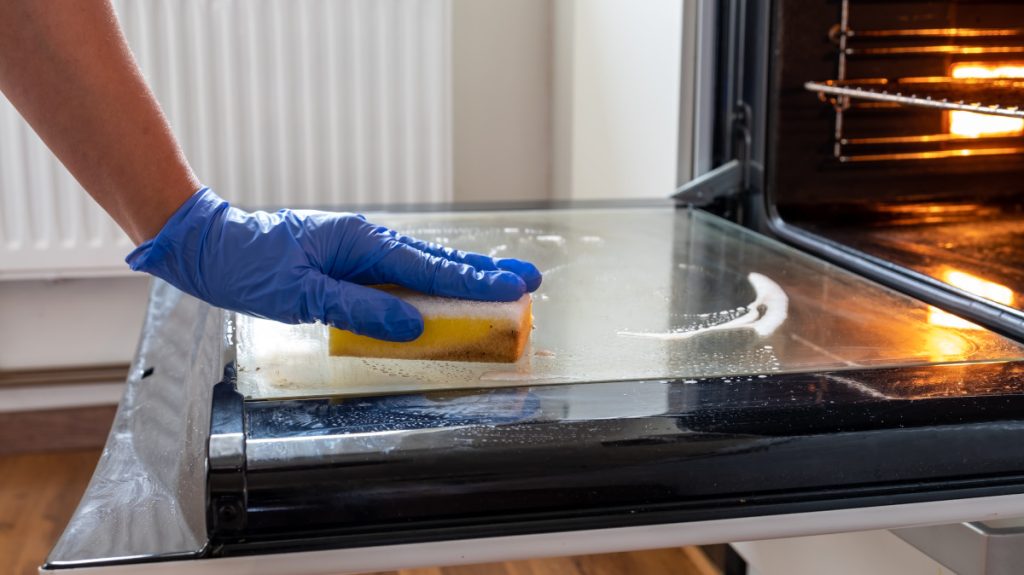
Spray the oven door with a vinegar solution and wipe it down with a soft cloth. Just be sure to keep the gasket dry—unless you want it to start resembling a soggy sponge! Trust me, the oven door will thank you for the gentle touch.
- Do a final wipe-down
Give your oven one last once-over to make sure every surface is sparkling and streak-free. It’s like the oven’s getting its red-carpet moment. Let it shine!
- Replace your oven racks
Now, pop the racks back in, and voilà! Your oven’s ready to cook up a storm. Don’t forget, those racks have worked hard. Let’s give them a break!
Benefits of a Natural Homemade Oven Cleaner
A natural homemade oven cleaner outperforms store-bought alternatives in three ways that actually matter: it’s genuinely non-toxic (no residues that end up on your food), it costs a fraction of the price, and it produces no harsh fumes — making it the smarter choice for most Australian households. Baking soda, vinegar, and lemon juice are safer, and you can whip up a really powerful DIY oven cleaner recipe without breaking the bank. It’s toxin-free, fresh-smelling, and works wonders on stubborn grease — especially great for those with allergies, asthma, or sensitive skin, providing a safer cooking environment for your entire family.
Making your own oven cleaner also contributes to sustainable living. By using reusable containers to mix and store your cleaner, you reduce single-use plastic waste. Natural ingredients like baking soda and vinegar are eco-friendly, breaking down easily without harming the planet.
How often you clean your oven depends on how much you cook. Spills and messes should be cleaned right away. For the best results, aim to clean your oven every three months or more frequently if you use it heavily. Still, clean it up when you notice:
- Smoke when the oven is on;
- Crusty food or burnt residue at the bottom;
- Greasy, burning, or fish smell;
- Grime on the door.
Regular cleaning helps prevent grease buildup. It also keeps your oven safe and in top working order. For those really stubborn stains or when you’re short on time, professional oven cleaning services can make your oven sparkle again with minimal effort from you.
How to Clean Your Oven with Lemon
Lemon is a surprisingly capable natural oven cleaner in its own right. The citric acid cuts through light grease, neutralises odours, and leaves your oven smelling genuinely fresh — not like a chemistry lab. It works best as a maintenance clean or a quick refresh between deeper baking soda sessions, rather than a substitute for heavy carbonised buildup (for that, the overnight paste above is your best bet).
Here’s the simple rub-down method:
- Halve a lemon – Cut a lemon in half. That’s your natural scrubber — no spray bottle needed.
- Rub over greasy spots – Press the cut face of the lemon directly onto greasy patches inside the oven or across the door glass. Squeeze gently as you go to release the juice onto the surface. Work it into the grime with a light circular motion.
- Leave for 10–15 minutes – Let the citric acid do the work. Ten to fifteen minutes is enough for light grease and odours.
- Wipe clean – Wipe the interior down with a damp cloth. For a combined approach, add a squeeze of lemon to the vinegar spray from Step 7 above — the acid from both ingredients works together on stubborn residue.
Want to make it even easier? Try the steam method — place halved lemons in an ovenproof bowl of water, heat your oven to 120°C for about 20 minutes, then switch it off and let it cool. The lemon-scented steam loosens grime across every surface, and a quick wipe-down afterwards is all you need. It’s the same steam principle from the tip in the recipe section above, just with a citrus twist. For anything heavier than maintenance cleaning, go back to the baking soda paste — that’s where the real power is.
Frequently Asked Questions
Yes — baking soda paste is effective on most baked-on grease when left overnight. The longer it sits (up to 24 hours), the better it works. For very heavy carbonised buildup, a second application or a professional clean may be more practical.
Avoid applying baking soda paste inside a pyrolytic (self-cleaning) oven’s interior, as residue can interfere with the high-heat cycle. Use the natural spray method only (vinegar and lemon solution) on the door glass. Check your oven’s manual before using any cleaner.
Yes, with care. Apply the baking soda paste to the oven walls and base as described, but keep it away from the gas burner ports and any igniter components. Wipe thoroughly to ensure no paste residue blocks the burners before relighting.
Make oven cleaning easier!
Schedule a professional service today and leave the mess to us!
Takeaways
- Natural & safe – Go green with baking soda, vinegar, and lemon juice- are the ultimate trio for a DIY oven cleaner for baked-on grease. It is a budget-friendly cleaner that’s tough on grease, yet easy on your health and the planet.
- Simple steps, great results – Apply the paste, let it sit overnight, and wipe clean for a sparkling oven. Don’t forget to clean the racks, too!
- Eco-conscious cleaning – This DIY solution reduces plastic waste and keeps your oven and your home safe from harsh chemicals.