Last update: 4 days ago
Yes — you can restore wood furniture with vinegar, and it works better than most people expect. Diluted white vinegar cuts through grime, lifts water stains, and — combined with olive oil or canola oil — polishes and conditions the wood without harsh chemicals. This post covers exactly how to restore wood furniture with vinegar: the main cleaning method, water stain removal, no-stripping restoration with oil and vinegar, and how to treat minor scratches.
The key word is diluted. Straight vinegar is too acidic for wood and will strip the natural oils from the surface over time. Get the ratio right, and it’s one of the most effective natural cleaners your pantry has to offer.
Can you clean wood with vinegar?
Yes — white vinegar diluted with water is safe and effective for cleaning most sealed or finished wood furniture. Its mild acetic acid (pH ~2.4) cuts through grease, grime, and product buildup without the harsh chemicals found in many commercial cleaners, provided it’s always diluted and never left to sit on the surface.
When gently applied with a damp cloth, the diluted vinegar loosens stubborn dirt and makes it easy to wipe away cleanly — no vigorous scrubbing needed. It leaves wood surfaces clean and safe without the residue some multipurpose sprays leave behind.
One thing worth knowing: diluted vinegar is fine on varnished wood for regular cleaning. What you want to avoid is applying concentrated vinegar repeatedly to a varnished surface — over time, the acidity can soften or cloud certain varnish finishes. If you’re wondering whether vinegar will strip varnish, the short answer is no — it isn’t strong enough for that. For actual varnish removal, you’d need a dedicated chemical stripper or a heat gun. Vinegar is a cleaner, not a stripper.
Cleaning process using vinegar solutions
Using vinegar to clean wood furniture is not only effective but also eco-friendly. Plus, it’s available in most households. Here’s how to clean wood furniture with vinegar and breathe new life into your favourite wooden pieces.
What you will need:
- Vinegar
- Olive oil
- Microfiber cloths
- Vacuum cleaner
Time:
- Preparation time – 5 minutes
- Active time – 30 minutes
- Total time – 35 minutes
Difficulty:
- Easy
Before starting the cleaning process, first evaluate the condition of your wood furniture. Take the time to identify any underlying problems. Choose the most suitable approaches for cleaning and restoring it accordingly.
- Scratches – Inspect the wood surface for any visible scratches or gouges.
- Watermarks – Look for light or dark spots caused by spills or moisture.
- Dull finishes – Assess the overall shine of the furniture.
- Cracks or damage – Check for cracks, chips, or warped surfaces.
- Previous treatments – Note any past treatments like varnish or wax.
- Overall condition – Step back and consider age and wear.
- Remove hardware and cushions
Set aside any cushions or pillows resting on the furniture’s surface. Remove any reinstallable hardware, like screws or decorative knobs — but don’t remove anything that holds the furniture together structurally.
- Vacuum or dust the furniture
The surface should be clean before any liquid goes near it. Dust off your wooden furniture thoroughly with a vacuum cleaner to remove loose dirt and debris.
- Clean cushions, if applicable
Before placing your cushions or pillows back on the freshly cleaned wood furniture, give them a clean too. Check the labels for guidance on how to clean them properly.
- Dilute white vinegar with water
Mix white vinegar and water in a 1:1 ratio for general cleaning. Add a small amount of mild dish soap to the mixture to help mask the vinegar odour — the smell typically dissipates within 30–60 minutes as the surface dries.
- Clean with a damp cloth
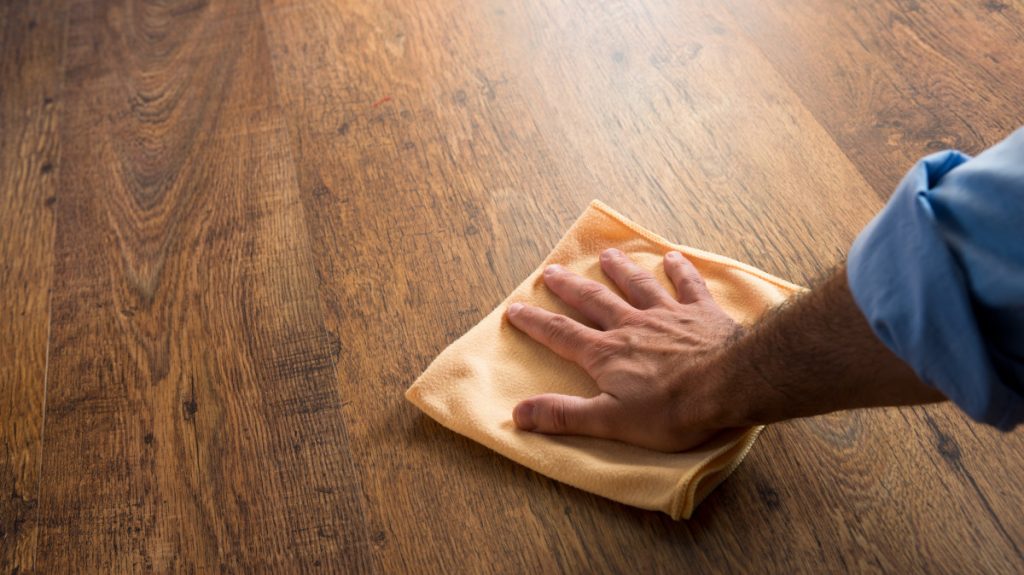
Dip a soft microfiber cloth into the vinegar solution and wring out the excess liquid well. Gently wipe the wood surface using a circular motion. Avoid saturating the wood — a damp cloth is all you need. Rinse the cloth when it becomes visibly dirty.
- Buff out excess moisture
Use a clean, dry cloth to buff the wood in a circular motion. If you notice any spots that didn’t come fully clean, apply a little more solution and return to buffing. Finish by buffing away any remaining moisture.
- Let it dry for about 30 minutes
Give the furniture time to dry completely before use. The wood will appear newer, brighter, and noticeably less worn once it’s dry.
Include the cleaning of wood furniture with vinegar in your weekly regular cleaning schedule. Frequently dusting and wiping can help preserve your wooden furniture. A duster can make this process easier.
Restoring wood furniture without stripping
Got a piece that looks tired, dull, or scratched — but isn’t structurally damaged? Good news: restoring wood furniture without stripping or sanding is entirely possible, and vinegar is central to how it’s done. The olive oil and vinegar polish below replenishes surface moisture and enriches the wood’s colour without you touching a piece of sandpaper. The canola oil and vinegar scratch treatment works the same way for minor surface marks.
This no-stripping approach is ideal for furniture showing surface wear — dullness, minor scratches, or that “left-in-the-garage-too-long” look. It won’t fix deep structural cracks, warped boards, or finish failure across large areas — those need professional attention. But for the everyday wear that makes good furniture look older than it is, the methods in the next section deliver real results without the mess of a full restoration.
Treating water stains and polishing the wood
Water rings, scratches, and faded stains may make you believe your wood furniture is beyond repair. Before you throw it away, try some of the following simple, no-sanding-required tips for restoring wood furniture with vinegar and oil.
Removing water rings or stains from wood furniture
Given how frequently we use our wooden furniture, water stains are inevitable. Sadly, leaving hot or cold drinks on a wooden surface can leave unsightly rings or markings behind. Get rid of those pesky stains on your wooden furniture with this solution.
- Mix equal parts white vinegar and water in a bowl.
- Dab a soft microfiber cloth into the solution.
- Wring out any excess solution.
- Rub the water stain until it’s removed.
- Let it sit for a few minutes.
- Wipe off the mixture using another (clean) microfiber cloth.
- Dry thoroughly.
Polishing with an olive oil and vinegar mixture
Olive oil works so well on wood because its fatty acids penetrate the wood fibres, replenishing moisture and enriching the surface colour. When applied gently, it seeps deeply in, causing the fibres to swell slightly and bringing the colour back to life. This recipe is perfect for cleaning outdoor furniture with vinegar:
- Mix ¾ cup extra virgin olive oil with ¼ cup white vinegar.
- Apply it to the wooden surface with a microfiber cloth.
- Add a few drops of essential oil for scent (an optional step).
- Wipe your furniture clean.
- Buff off excess moisture with a dry cloth.
This mixture will revitalise a dried-out piece of wood. It’s perfect for furniture that has little water damage but looks old and worn out because it’s been stored in the attic, garage, or basement for too long.
For painted wood furniture, the approach is slightly different. Vacuum it regularly with the brush attachment to prevent dust and debris from building up in the paintwork. Then use the olive oil and vinegar mixture above to clean and condition it. Wipe up spills and crumbs immediately — paint is more porous than a sealed timber finish, so stickiness sets faster and is harder to shift once it’s had time to dry.
Treating minor scratches
Wood tables, like all wooden furniture, are prone to scratches and damage. Daily use can cause scrapes and wear on the finish. Depending on how dark the finish is and how soft the wood is, the damage to your table may be more frequent or noticeable. It is easy to fix a minor scratch on a wood table. Mix ¾ cup of canola oil with ¼ cup of vinegar. Mix thoroughly and apply to scratch marks or minor damaged areas. The marks will gradually fade, and the wood will appear as good as new.
Frequently asked questions
Diluted white vinegar is safe for most sealed or finished wood furniture. Avoid using it on unfinished, untreated, or raw wood — the acid can penetrate the grain, raise the surface, and cause damage that’s tricky to reverse. When in doubt, always test on a small, inconspicuous area first before cleaning the whole piece.
Adding a small amount of mild dish soap to your cleaning solution helps mask the smell during the clean. The vinegar odour typically dissipates within 30–60 minutes as the surface dries. If you’re using the olive oil polish, a few drops of essential oil stirred into the mixture is a simple way to leave the wood smelling fresh instead.
No — diluted vinegar won’t strip varnish from wood. It simply isn’t strong enough for that purpose. What it can do, if used undiluted or repeatedly in concentration, is soften or cloud certain varnish finishes over time. For actual varnish removal, you’d need a dedicated chemical stripper or a heat gun — vinegar is a cleaner, not a stripping agent.
Having trouble finding the time to properly care for your wood furniture?
It’s no trouble at all. We’re here to help!
Takeaways
- Always dilute white vinegar 1:1 with water before applying it to any wood surface — undiluted vinegar strips the natural oils and leaves wood dry and dull.
- Use white vinegar for lighter timbers and apple cider vinegar for darker woods — the difference matters for colour consistency.
- The olive oil and vinegar mix (3:1 ratio) restores surface moisture and enriches colour without any sanding — a genuine no-stripping restoration method for dull or worn furniture.
- Test any solution on an inconspicuous area first — if the finish looks patchy, cloudy, or changes colour, stop and try a different approach before going further.
- If the furniture has deep cracks, structural damage, or finish failure across large areas, vinegar-based solutions won’t be enough — professional furniture restoration is the better option.