
Last update: 3 weeks ago
The good news is you can get rid of burnt smell in a microwave without much fuss — steam cleaning with white vinegar or lemon juice tackles most odours in a single session, while natural absorbents like baking soda or activated charcoal handle anything that lingers. Whether the culprit is a forgotten bag of popcorn or last night’s leftovers, here’s exactly what to do.
Will the burnt smell go away?
A burnt smell will not go away on its own — each subsequent use reheats the burnt residue and intensifies the odour. You need to actively clean the microwave interior and deodorise it to remove the smell completely.
Smoke is one of the most persistent smells that lingers inside a microwave, and ignoring it only makes things worse. Each subsequent use essentially reheats the burned-on debris, intensifying the smell and negatively affecting the flavour of your food. Burnt odours can also penetrate other surfaces in your kitchen, spreading the unpleasant scent further — so prompt action matters.
To tackle the burnt smell effectively, start with ventilation — open windows and run a fan to help dissipate the odour. Then focus on cleaning both the interior of the microwave and surrounding surfaces. If you have a range microwave, remove all cookware items from the surrounding kitchen cabinets and open them widely, since the odour can absorb into wood fibres. Wipe down those areas if the smell has spread.
The smell can linger in the microwave’s filter as well, reigniting the next time it’s used. If the microwave simply stinks, you can safely resume using it once it’s been thoroughly cleaned. If any component appears physically damaged or burned, stop using it immediately — a damaged microwave is a fire hazard.
Cleaning solutions for neutralising burnt odour
When it comes to neutralising burnt odours in your microwave, thorough cleaning is key. Begin by unplugging the microwave to ensure safety while cleaning. Always take precautions! Be mindful to avoid using harsh chemicals near food surfaces. Instead, opt for gentle yet effective cleaning solutions to tackle the burnt odour effectively.
Natural remedies
Natural remedies can be highly effective in removing burnt smells from microwaves. Whether the culprit is burnt popcorn, overcooked food, or scorched plastic, it may take some time, but eventually the odour will go away. Check out these cleaning hacks to restore the fresh scent to your kitchen.
Clean the inside of your microwave
A thorough cleaning is your first line of defence against smells. Try this quick and simple technique first, then move on to the other methods if needed.
What you will need:
- Microwave-safe bowl
- Non-abrasive sponge
- Clean microfiber towels
- Steam with water
Remove any debris or loose burnt pieces from the microwave with your fingers. Heat 1 cup of water in a microwave-safe bowl for 3 to 4 minutes. The steam will loosen up the grime and make everything much easier to wipe away.
- Clean with dish soap
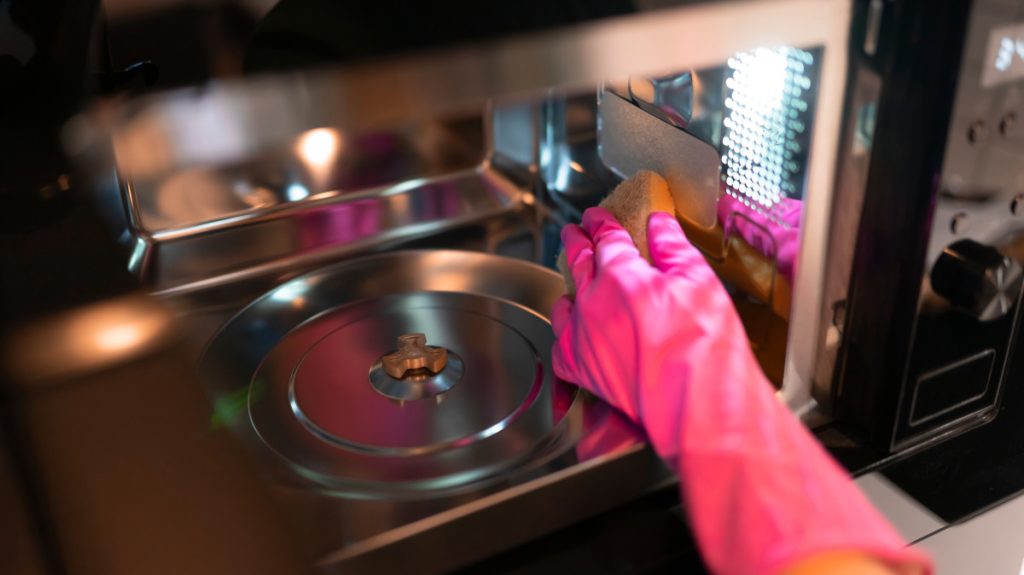
Gently wipe the inside with a cloth dampened in a mixture of water and a small amount of dish soap. When dealing with stainless steel units, follow the direction of the metal’s grain while rubbing. Use a soft sponge — not a tough scrubber, which will do more damage than good.
- Rinse and dry
Use fresh water to rinse the interior, then wipe it dry with a lint-free cloth. Leave the microwave door open for 2–3 hours to allow proper ventilation and airing out.
Steam your microwave with lemon juice, lemon slices, or vinegar
In cases where strong odours — such as burnt fish or plastic — linger despite regular cleaning, a bit of extra help goes a long way. If the steps previously outlined on how to clean your microwave don’t fully eliminate the odours, these natural cleaners are your next move.
What you will need:
- Microwave-safe bowl
- Non-abrasive sponge
- Clean microfiber towels
- Vinegar or lemon juice
- Lemon slices (optional alternative to lemon juice)
- Vanilla extract (optional)
Instructions:
- Mix a cup of water with three tablespoons of white vinegar in a microwave-safe bowl. Alternatively, squeeze in lemon juice or place half a lemon cut into slices directly in the bowl of water — both work just as well. You can add a tablespoon of vanilla extract for a more pleasant smell.
- Heat the solution in the microwave for six minutes. Allow it to come to a boil and fill the microwave with steam.
- Let the bowl stand for 15 to 20 minutes for the steam to dissipate the smell.
- Carefully remove the bowl using an oven mitt or pot holder.
- Wipe down the inside of the microwave — including the top and the door — with a fresh cloth dipped in the remaining solution.
- Wash the plate and wheels with soap and water, or simply toss the glass microwave plate in the dishwasher for a thorough clean.
Neutralise the odour
Struggling with how to neutralise a burnt smell that just won’t quit? Give these techniques a go:
Baking soda
- Place small containers of baking soda in key areas to neutralise and absorb burnt smells.
- Prevent access by children and animals.
- Leave it in the microwave overnight or even for a few days to absorb the smell.
- Attach a note on the microwave door as a reminder to take out the baking soda before heating anything.
Activated charcoal
- Place a bowl of activated charcoal, available at most pet stores, in the microwave.
- Close the door and allow it to remain for several days or until the odour is gone.
Unscented cat litter
- Add unscented cat litter to a microwave-safe bowl and place it in the microwave for several days.
- Remember to remove the bowl before using the microwave.
Coffee grounds
- Passive method: Place a bowl of fresh, dry coffee grounds in the microwave, close the door, and leave overnight or until the odour is gone. The grounds absorb and mask burnt smells without any heat needed.
- Active method: Add a couple of spoonfuls of ground coffee to a microwave-safe bowl and mix in water until it looks soupy. Microwave for 2–3 minutes to steam the interior and help neutralise the smell more quickly.
Warm vanilla
- Fill a microwave-safe bowl with water and add two tablespoons of vanilla extract.
- Microwave for five minutes or until the liquid boils and steams the microwave.
- Allow the liquid to cool for five minutes, then wipe down the insides with a microfiber cloth.
These methods offer effective ways to neutralise burnt odours and restore freshness to your microwave. You can include some of them in your cleaning schedule to keep the smell out of your kitchen.
Commercial products
When it comes to tackling stubborn burnt odours, commercial products can do the heavy lifting. Enzyme-based odour eliminators and microwave-specific cleaning sprays — available at supermarkets and hardware stores — are formulated to break down burnt food residue rather than simply masking the smell. If natural remedies haven’t fully done the job, these are a simple and practical next step for keeping your microwave fresh.
Preventative measures to avoid future incidents
When it comes to maintaining a fresh-smelling and functional microwave, implementing preventative measures is key. Consider these tips:
- Use sponges and non-abrasive cloths to prevent scratches on the interior.
- Prevent microwave accidents by closely monitoring when heating dry and starchy items.
- Consider changing the charcoal filter if the burnt smell persists even after cleaning and deodorising.
- Wipe down the microwave after each use using soft cloths to keep it clean.
- Clean the microwave down with a non-abrasive cloth to preserve the internal finish.
- Always use microwave-safe dishware when cooking inside your microwave.
If you find yourself facing tough times and not willing to spend more time cleaning burnt-out smells, consider reaching out to experts for help. Engaging professional help for tasks such as kitchen appliance care is totally fine. You can maintain the cleanliness of your home and kitchen by booking regular cleaning.
Frequently asked questions
Steam cleaning with vinegar or lemon takes around 20–30 minutes end-to-end, including the steaming and wipe-down. For very strong odours, leave an open bowl of baking soda or activated charcoal inside overnight — 8 to 12 hours is usually enough for full odour absorption.
If the microwave simply smells burnt, it is safe to use once it has been thoroughly cleaned and deodorised. However, if any internal component appears physically damaged or scorched, stop using the appliance immediately — a damaged microwave presents a genuine fire hazard.
If the smell persists after cleaning, the charcoal or grease filter may have absorbed the odour — check your model’s manual for how to remove and replace it. Residue trapped in door seals or vents can also hold the smell; wipe these areas with a damp cloth soaked in white vinegar to help clear them.
Is the strong odour of burnt residue overwhelming for you to eliminate?
Let us do it for you!
Takeaways
- Act promptly – Address burnt smells quickly to prevent them from lingering and spreading further in your kitchen.
- Safety first – Ensure proper ventilation by opening windows and running a fan when dealing with burnt odours in your microwave.
- Thorough cleaning – Use gentle yet effective cleaning solutions to remove burnt-on debris and neutralise lingering odours. Focus on both the interior of the microwave and surrounding surfaces.
- Natural remedies – Utilise natural ingredients like lemon juice, lemon slices, vinegar, or coffee grounds to help deodorise your microwave and restore freshness.
- Prevent future incidents – Monitor cooking times closely, use microwave-safe dishware, and implement regular maintenance routines to keep your microwave clean and odour-free.
We would love to hear about your experience with any of these methods!