Last update: 2 weeks ago
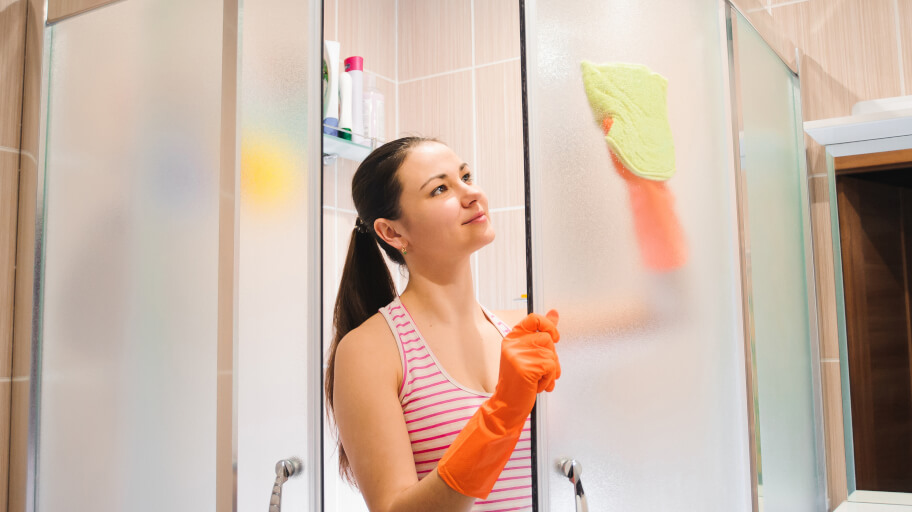
Knowing how to clean shower glass properly is essential for maintaining a clear, hygienic bathroom. Unfortunately, easy cleaning and maintenance don’t quite make the list. Whether you prefer framed, frameless, or semi-frameless, regular cleaning is essential for protecting the glass and maintaining its spotless look.
Regular use of a squeegee after each shower can prevent water stains from forming on your shower glass. Proper maintenance practices such as wiping down your shower after each use, avoiding sharp objects near your glass, and seeking a professional cleaner’s help when necessary can prolong its lifespan – and even help prevent issues like pink mould from forming in damp corners.
Knowing some quick and easy tips also helps, especially in tackling the biggest problem – hard water stains. Natural solutions such as vinegar, lemon juice, or baking soda can effectively remove dirt and grime from shower glass and restore its pristine look. Commercial cleaners are also available for those who prefer convenience over natural remedies.
In this article:
Method 1. Vinegar
What’s the best thing to clean shower glass with:
- Vinegar
- Spray bottle
- Microfibre cloth
Vinegar has established itself as the №1 eco-friendly cleaning agent. Thanks to its degreasing and germ-killing powers, it’s especially useful in problematic areas like the kitchen and bathroom. If you don’t mind the smell, the vinegar will also prove quite effective for removing all hard water stains.
Here’s a step-by-step guide on how to promptly get the shower screen clean using plain vinegar:
- Prepare a clean spray bottle
Grab a spray bottle that’s clean and dry — any residue from a previous product can interfere with the vinegar.
- Fill with vinegar solution
Fill it either with pure white vinegar or dilute it 50/50 with hot water. Use a heat-safe container when mixing with hot water and take care around steam.
- Spray both sides of the glass
Spray thoroughly on both sides of the glass shower door, making sure the entire surface is coated.
- Leave it to work
Leave for 15 minutes. For heavier build-up, extend the dwell time — the vinegar needs time to break down mineral deposits and soap scum.
- Rinse well
Rinse well with water and leave to dry, or move straight on to the next step.
- Polish with a microfibre cloth
Buff the glass using a microfibre cloth or cotton rag — an old pillow case works a treat — to bring up a streak-free shine.
If you are looking for a natural alternative, this is truly the best way to wash a shower or any glass to perfection. The vinegar cleaning method is fast and easy, which comes in handy when you have more to cover, like entire shower glass enclosures. It could also serve as a general bathroom sanitiser, given that natural stone tiles or other elements aren’t present.
Method 2. Vinegar and baking soda
What to clean the shower glass with:
- Vinegar
- Baking soda
- Sponge
If you think your shower glass could use a deeper cleaning, combining vinegar and bicarb soda is easy and effective. The white crystals can work through thicker soap scum and limescale formations, thanks to being abrasive.
The method is quite simple, too. After following the first three steps above, make sure to dampen a sponge well and sprinkle baking soda on top of it. Now, all that you have to do is scrub gently on both sides of the glass screen. Leave the ingredients to react for a few minutes and then rinse well.
Method 3. Salt and citrus (lemon/grapefruit)
What to use to clean your shower glass:
- Salt
- Lemon/grapefruit
Another natural way to clean a shower screen until it’s spotless involves these simple products. Whether you prefer a fresh lemon or grapefruit, you can rest assured that in the end, you’ll have a sparkling shower glass and a nice-smelling bathroom, as well!
This is an excellent alternative for everyone who isn’t a fan of the strong vinegar smell. The citric acid will cut through the grime just like the vinegar, while the salt will give you the abrasive power to make all unpleasant formations disappear.
Here’s how to use citric acid to clean your shower glass:
- Cut one lemon/grapefruit in half;
- Cover it with kitchen salt;
- Scrub the shower screen. Make sure to squeeze well for the juice to come out and keep adding salt from time to time.
- Rinse and enjoy!
Method 4. Eucalyptus products
What you will need:
- Cleaning product with eucalyptus oil
Soluble eucalyptus-based spray cleaners — widely available in Australian supermarkets — work just like any bathroom spray: apply to the glass, leave for a few minutes, then rinse and wipe down. They cut through soap scum without a lot of scrubbing and leave a fresh scent behind. Just steer clear of pure eucalyptus essential oil — it’s too oily and will leave a greasy residue on the glass that takes more effort to remove than the original problem.
Method 5. WD-40
What you will need:
- WD-40
- Sponge
WD-40 can do more than help you polish stainless steel. Thanks to its water-displacing formula, you can add cleaning of the shower screen to the list of popular uses around the house. Spray, distribute it with a sponge, then rinse.
Method 6. Dryer sheets
What you will need:
- Dryer sheets
- Sponge
- Jar
- Vinegar
Yes, dryer sheets can actually help erase water stains and other dirt from your shower screen. Instead of throwing away the used and unnecessary dryer sheets, just repurpose them. They can help erase the soap scum right away, and the best part is that you don’t have to add any chemicals. It’s enough to dampen the dryer sheet, and you’re ready to clean any glass shower door. Rinse well with warm water and do a once-over with a sponge if needed.
For convenience, you can stash all used dryer sheets in a jar with a few drops of water or vinegar. They can be handy for keeping elements of the bathroom clean, like mirrors and faucets, as well as for thorough dusting around the house. Finally, you can always book professional cleaning services.
Why limescale builds up on glass?
Limescale on shower glass is caused by hard water — water that contains high concentrations of dissolved calcium and magnesium minerals. When water evaporates from the glass surface, these minerals are left behind as a white, chalky deposit that hardens over time.
We’ve all seen it at some point — a white-ish deposit with a hard structure that seems to grow exponentially over time when not treated. This is the residue left from hard water, as the latter is known for being rich in minerals and ions that are difficult to remove from the water. However, statistics show that water in Western and Southern Australia is harder.
While limescale is a common problem for pipes, boilers and kettles, it can also affect shower glass, which comes in contact with evaporating hard water.
What about soap scum?
Soap scum is a white or grey film that forms when soap reacts with the minerals in hard water. It builds up on shower glass progressively and can also affect tiles, tubs, and sinks.
It only gets thicker if not treated — so the sooner you tackle it, the easier the clean.
How to keep the shower glass clean and prevent staining
Hard water stains and soap scum are the toughest things to remove when it comes to shower screens — so the smarter move is to stop them building up in the first place. Here’s how:
- Daily habit: Keep a squeegee in the shower and run it over the glass after every use. It takes about 20 seconds and makes a dramatic difference to how quickly build-up forms.
- Weekly clean: Do a full clean using one of the methods above at least once every 5–7 days — or more often if your household showers frequently. A vinegar and water spray kept on hand makes this quick and easy.
- Long-term protection: Apply a water-repellent glass treatment (such as Rain-X or a similar product from your local hardware store) to help water bead off the surface rather than sit and evaporate. For a more permanent fix, a water purification or softening system will reduce mineral content at the source — though it’s a bigger upfront investment.
- Soap swap: Switch to liquid soap or shower gel — they’re more soluble than bar soap and produce significantly less scum.
Do you need a helping hand?
Hire a professional cleaning team!
Takeaways
- Do a quick cleaning of the glass screen after a shower every chance you get;
- Dedicate time to a deeper cleaning at least once every 5-7 days, testing some of the methods above;
- Reduce cleaning time by investing in products that provide protection for the glass against hard water build-up;
- Give the squeegee a central part of your bathroom cleaning kit and teach everyone at home how to use it.