
Last update: 2 weeks ago
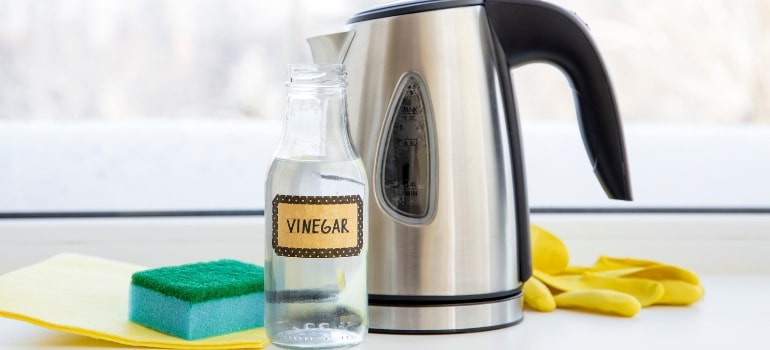
Despite its vital role in the culinary space, the humble kettle is often disregarded when it comes to regular maintenance and cleaning. Despite its renowned efficiency and safety in swiftly heating water, surpassing both the microwave and stove, it is unfortunately neglected.
Knowing how to clean a kettle properly is essential — because getting that morning coffee, a nice cup of tea or even soup has never been easier, though the privilege of enjoying all those things is endangered when the appliance is not properly sanitised. More importantly, our health could be at risk, so keeping on top of how to clean and descale the kettle matters more than most people realise.
- Descale the inside with white vinegar or lemon monthly in hard-water areas (every 2–3 months in soft-water areas).
- Clean the outside with warm soapy water every 1–2 weeks to keep it looking sharp.
- Never submerge the kettle in water or boil soapy water inside it — both can damage the heating element permanently.
- Empty the kettle after each use to prevent limescale build-up and rust from taking hold.
Why you should clean your kettle
Limescale from hard water forces the kettle to use more electricity, affects the taste of your water, and can damage the heating element over time — making regular cleaning essential for both appliance performance and safe drinking water.
Neglecting to clean the kettle for long periods of time could damage the appliance and the need for deep cleaning that may not prove successful after all. Limescale build-up is the biggest problem, which causes higher electricity consumption as the kettle takes longer to warm up the water. In addition, limescale affects the H2O quality, which tends to worsen the longer the kettle is not cared for.
Given that limescale is formed after hard water is boiled and left in a kettle, the best way to avoid the problem is not to leave the liquid to sit in the appliance. Also, using the kettle for cooking calls for more extensive cleaning. As for cleaning frequency, it mainly depends on the area you live in and the water quality there. Expert cleaners suggest you inspect your kettle weekly, and if you notice any hard white deposits, get to work right away.
How to clean and descale the inside of a kettle naturally
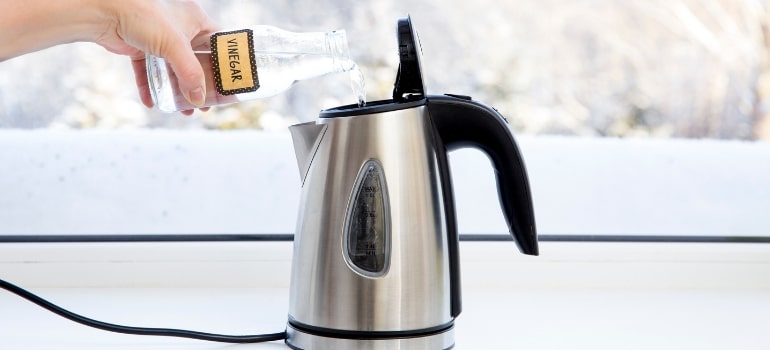
Descale and clean a kettle with vinegar
Acid is a good hard water stain remover, which is why white vinegar is an important ingredient to include in your homemade descaler. This simple method could be used regularly to clean an electric kettle, whether it’s made of stainless steel, plastic, glass or other material.
- Mix vinegar and water, pour into the kettle
Measure equal parts white vinegar and water — enough to cover the affected areas inside the kettle — then pour the solution in.
- Boil, then leave to soak
Let the solution come to a boil, then unplug the kettle and leave the mixture to sit inside for 15–20 minutes.
- Scrub the interior
Take a toothbrush and scrub the inside of the kettle thoroughly, focusing on the edges and all those hard-to-reach places where limescale loves to hide.
- Rinse well
Pour out the solution and rinse the kettle at least 2–3 times with fresh water before leaving it to dry.
- Boil fresh water to check results
Fill the kettle with fresh water, boil it, and check that the water tastes and smells clean. Job done!
Descale and clean a kettle with lemon
Cleaning a kettle with lemon and water solution is a natural and safe option compared to other harsh chemicals. The lemons will not just destroy the limescale but will also brighten up the kettle’s interior and provide a pleasant, refreshing smell.
- Cut and squeeze a lemon.
Cut a lemon into two halves and squeeze the juice into the appliance. When you’re done, use the two halves and rub the inside parts to remove any hard water stains. Cut the lemon into small pieces and add the pieces to the lemon juice inside the kettle. - Create a mixture.
Add approximately 500ml of water to the mixture. You don’t need to fill the kettle to the top, just make sure you pour enough to cover the bottom elements and fill the appliance halfway. - Boil the lemon water.
Turn on the kettle and let the solution boil. Let it sit for around 15 minutes. After that, disconnect the kettle from the power source. Leave the kettle for a couple of hours until it’s completely cooled off. - Scrub the kettle.
Don’t throw out the lemon water yet. Use a soft sponge and scrub the inside and the outside of the kettle thoroughly. - Rinse and dry off the kettle.
Remove the mixture and rinse the kettle 4-5 times with warm water. Use a microfiber cloth to dry off the outside of the kettle.
Clean and descale the kettle with baking soda
Another natural cleaning option is to create a baking soda and water solution. Before proceeding with the cleaning, make sure the kettle is unplugged for your safety.
How to clean the outside of a kettle
To clean the outside of the kettle, create a solution with warm water and dish soap. Wash and scrub the outside of the kettle using a soft sponge. Rinse it with water and dry it off carefully using a microfiber cloth. Be careful not to get any soapy water inside the kettle. Make sure to clean the outside of the kettle at least once every two weeks or so.
Don’t put the appliance into a laver full of water. It can damage the heating elements irrevocably.
How to remove rust from a kettle
Kettles are constantly exposed to water, and if you live in an area with hard water and if there is moisture left in the kettle, it can rust. To prevent rust from building up in your kettle, you simply need to wipe up the kettle after each use.
If there is rust on your cast iron kettle, you can remove it by scrubbing the rust stains gently with a wire brush. Rinse the residue with cold water. If there are still rust spots on the kettle, you can try soaking up the kettle in Coca-Cola. Pour enough cola to cover the bottom and leave it for 20 minutes. If there is a lot of rust left, you may need to leave it soaking overnight. Remove the cola and clean the kettle thoroughly with warm water.
How often should a kettle be cleaned
Clean the outside every 1–2 weeks; descale the inside monthly if you’re in a hard-water area, or every 2–3 months in a soft-water area. If you spot white deposits, notice a slow boil, or detect an off taste, descale immediately — don’t wait for the next scheduled clean.
It all comes down to two things – how hard your water is and how often you actually use your kettle. Here’s a simple way to keep it in top shape:
- Every week or two: Give the outside a quick wipe and rinse the inside with fresh water. It’s amazing how dust, tea splashes, and that faint film can sneak in if you don’t.
- Every month or so: If you’re in a hard-water area, it’s time to tackle the limescale. In softer water areas, you can stretch this out to every couple of months.
- Right away: Spot white chalky bits, notice a funny taste, or see the water taking forever to boil? Don’t wait—clean and descale straight away.
The key is simple – light, regular cleaning keeps it looking and tasting fresh, and periodic descaling keeps it working efficiently. In hard-water regions, kettles can turn into little limescale factories faster than you’d expect, so a quick peek now and then saves both your tea and the kettle in the long run.
Essential tips for cleaning a kettle
- To completely get rid of limescale, clean the kettle regularly by sprinkling baking soda and scrubbing the inside with a soft sponge.
- To remove limescale from the kettle’s filter, remove it and soak it in a cup of vinegar for 10 minutes to loosen up the stubborn residue. Use a soft sponge and scrub gently to clean it. Then rinse with water and let it dry.
- DON’T scrub the heating elements of the kettle because they have a special protective coat. If you scrub, you can remove it and damage the appliance when using it in the future.
- DON’T leave water in the kettle for too long, if you’re not planning to use it. It can damage the elements and even get rusty.
Can you clean a kettle by boiling soapy water?
You might think, “Why not just throw some soapy water in the kettle and give it a good boil?” And, technically, it does help loosen a bit of grime and gunk hiding inside. But here’s the thing—it’s not really the best idea. Soap foams up when it gets hot, and suddenly you’ve got bubbles sneaking into the spout or vent. And even if it doesn’t overflow, it can leave a stubborn soapy taste clinging to the metal or heating element. Trust us, you don’t want that lingering in your morning coffee. Plus, over time, all that residue can do a number on the kettle itself, shortening its life without you even noticing.
Frequently asked questions
Yes. Dissolve one to two tablespoons of food-grade citric acid powder in 500ml of water, pour it into the kettle, boil, and leave for 20 minutes. Rinse thoroughly two to three times afterwards. Citric acid is as effective as vinegar for dissolving limescale and leaves no lingering smell — a handy option if you find vinegar a bit pungent.
Limescale itself is not harmful to health — it is primarily calcium and magnesium carbonate from hard water. However, it reduces heating efficiency, can affect the taste of your water, and may shorten the kettle’s lifespan if left untreated, which is why regular descaling is worthwhile.
Do you need a helping hand?
Hire a professional cleaning team!
Takeaways
Leaving water in the kettle for a long time can harm its components and lead to rust formation. To prevent any harm, it is advised to empty out any leftover water after each use. But if keeping your household appliances clean and maintained is a challenge, think about hiring a professional cleaning service to assist you.