Last update: 19 hours ago
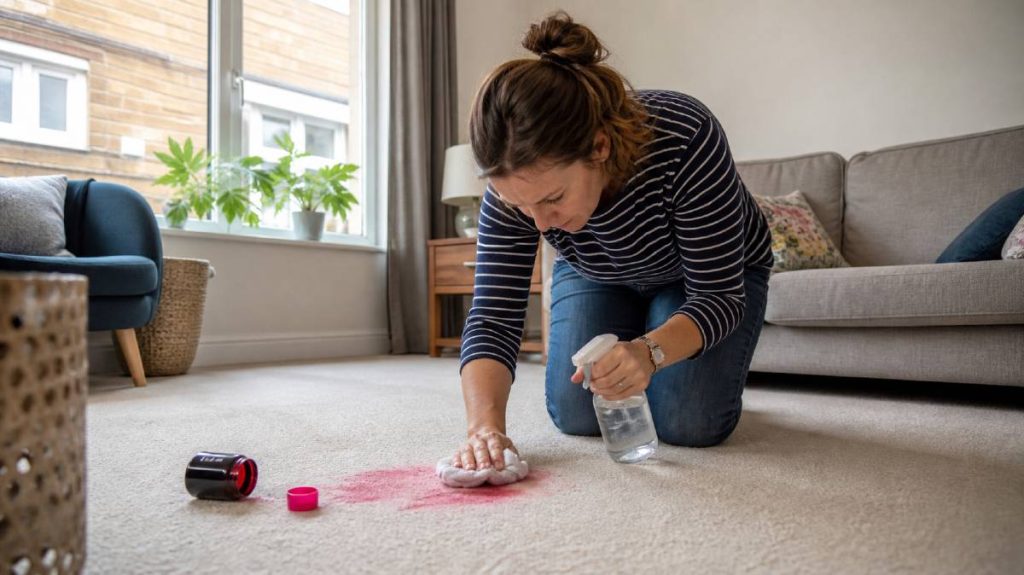
You look down and there it is. A bright splash of red, blue, or green sitting in the middle of your carpet like it owns the place. Whether it’s a birthday cake mishap, an overenthusiastic icing session, or a dropped bottle of food colouring, the result is the same: a vivid stain that shows absolutely no sign of budging on its own.
The problem with food dye isn’t just that it’s colourful. It’s designed to stain. That’s the whole point of it. The dye molecules bond to fibres quickly, which means time is the biggest factor working against you. The other thing people underestimate is fibre type. What works on a synthetic carpet can quietly destroy a wool one.
This guide covers the removal methods that actually work, how to adapt them to your carpet’s material, and where things tend to go wrong when people skip the right steps.
TL;DR
- Act immediately: blotting within the first few minutes dramatically improves your chances.
- Different carpet fibres react differently to cleaning agents — method matters as much as speed.
- A white vinegar and warm water solution handles most fresh food dye stains effectively.
- Hydrogen peroxide tackles tougher stains but must be patch tested before use.
- Wool carpets need the gentlest approach; nylon can handle more aggressive treatment.
- Scrubbing spreads the stain and damages fibres — blot only, always.
- Stains that reappear after drying are caused by wicking from the carpet backing, not incomplete surface cleaning.
How Do You Get Food Dye Out of Carpet?
Food dye can be removed from carpet by acting quickly, blotting away the excess, then treating the stain with a white vinegar and warm water solution. For stubborn cases, a diluted hydrogen peroxide mix is the next step. Work gently, rinse thoroughly, and match your method to the carpet fibre type to avoid causing damage alongside the stain.
Here’s the step-by-step process that gives you the best shot at full removal:
- Act immediately. Blot the stain with a clean white cloth the moment it happens. Press firmly, don’t scrub. Work from the outer edge inward to stop the stain spreading.
- Remove as much dye as possible first. Keep blotting with a fresh section of cloth until no more colour transfers. The less dye left in the fibre, the easier the next steps become.
- Mix a vinegar and warm water solution. Combine one part white vinegar with two parts warm water. This mildly acidic mix helps break the dye’s bond with the carpet fibres without being harsh enough to cause damage on most materials.
- Apply and blot the solution. Pour a small amount directly onto the stain or apply with a cloth. Let it sit for two to three minutes, then blot firmly. Repeat until the stain visibly fades.
- Rinse with clean water. Apply a small amount of plain cold water to the treated area and blot dry. This removes vinegar residue, which can attract dirt if left behind.
- Treat persistent stains with hydrogen peroxide. Mix one tablespoon of hydrogen peroxide with two tablespoons of cold water. Apply carefully, leave for five minutes, then blot clean. Always patch test on a hidden area first — this solution can lighten some carpet dyes.
The vinegar solution works because it’s mildly acidic. Most food dyes are synthetic organic compounds that respond to pH changes, so the acid helps disrupt the dye molecule’s grip on the fibre. It’s not magic, it’s chemistry. That’s exactly why plain water alone rarely does much after the first blot.
Does Carpet Fibre Type Change How You Should Treat a Food Dye Stain?
Yes, significantly. The method that clears a stain from a nylon carpet can permanently damage a wool one. Before you reach for any solution, it’s worth knowing what your carpet is actually made of.
- Wool. Delicate fibres that react badly to excess moisture and harsh chemicals. Stick to minimal water use, gentle blotting, and a diluted vinegar solution applied sparingly. Avoid hydrogen peroxide entirely on wool — it can bleach the fibres and cause permanent discolouration. Work slowly and dry the area thoroughly afterwards.
- Nylon. One of the more forgiving synthetic fibres. Nylon can handle more aggressive cleaning agents and a slightly wetter approach without issue. The vinegar solution works well here, and hydrogen peroxide (patch tested first) is a reasonable option for stubborn staining. Nylon also responds well to repeated treatment if one pass isn’t enough.
- Polyester. Often marketed as stain-resistant, which is true to a point. The fibres don’t absorb liquids as readily, so if you reach a food dye spill quickly, blotting alone may handle most of it. For anything that’s soaked in, a vinegar solution applied with light pressure usually does the job. Avoid soaking polyester carpets — the backing can be more susceptible to moisture damage than the face fibres suggest.
If you don’t know what your carpet is made of, check the label near a doorway edge or under the stairs, or look for the original product documentation. When in doubt, treat it as wool and use the gentlest method available. You can always step up the treatment if needed. You can’t undo fibre damage.
What Goes Wrong When Removing Food Dye from Carpet?
Even when you follow the right steps, things don’t always go smoothly. Here’s what tends to happen, and why.
The stain spreads when you start cleaning. This almost always comes down to scrubbing instead of blotting, or applying too much liquid at once. Scrubbing physically moves the dye outward across the fibres and pushes it deeper into the pile. Press down firmly and lift straight back up. That’s the correct motion. Every time.
The stain fades but won’t fully disappear. Stubborn food dye, particularly red and blue shades, can leave a ghost stain even after thorough treatment. This usually means some dye has penetrated the fibre fully rather than sitting on the surface. A second or third application of the vinegar solution, left slightly longer each time, tends to lift more of the residue. Don’t increase the concentration as a shortcut. More isn’t better here — it often just means more risk to the carpet.
The carpet looks different after treatment. Colour fading or texture change is almost always caused by using a product too strong for the fibre type, or by not rinsing properly. Leftover cleaning residue attracts dirt and can make an area look discoloured even after the original stain is gone. Rinse thoroughly with clean cold water and blot dry every time.
The stain reappears after drying. This is wicking. Moisture pulls residual dye up from deep within the carpet backing or underlay as the surface dries, depositing it at the surface again. If this happens, place a thick layer of white paper towels or a clean cloth over the damp area and weigh it down overnight. This encourages the moisture to wick into the towel rather than back to the surface. Repeat the treatment once the area is fully dry.
Wicking is also the reason a stain can seem resolved after treatment and then reappear days later. If dye has penetrated through the backing into the underlay, surface methods won’t fully address it. That’s the point where home treatment has genuinely reached its limit.
The main principle across all of these situations is the same: gentle, patient, and thorough beats fast and forceful every time. When multiple rounds of careful treatment haven’t shifted the stain, that’s not a reason to try something stronger. It’s a signal to stop and consider whether professional equipment is what the job actually needs. A professional carpet cleaning service uses extraction methods that work through the full depth of the pile, including below the backing, which is beyond what any household method can reach.
How Long Before a Food Dye Stain Is Considered Set?
There’s no fixed cut-off, but the window narrows fast. Within the first five to ten minutes, a significant amount of dye is still sitting on or near the fibre surface and responds well to blotting alone. After thirty minutes, more of it has bonded to the fibre, and you’re increasingly relying on chemistry rather than physical removal. After a few hours, particularly on natural fibres, the stain is likely to need multiple treatment rounds. After twenty-four hours or more, especially if heat or sunlight has been involved, some dye will have cross-linked with the fibre permanently.
That doesn’t mean old stains are always hopeless. It means your expectations need to adjust. A fresh spill treated immediately has a strong chance of complete removal. A stain that dried overnight is more likely to fade significantly but leave a trace. That trace can often be reduced further with repeated treatment, but it may never fully disappear depending on the dye colour, the fibre type, and how much dye was involved.
Red food dye is consistently the most resistant. The synthetic pigments used in red colouring have a stronger affinity for most carpet fibres than blue or yellow shades, which is why red stains often outlast several treatment attempts. If you’re dealing with red, manage expectations from the start and consider professional assessment if home methods plateau.
Need help with a tough carpet stain?
Book a professional carpet clean and let the right equipment handle what home methods can’t.
Conclusion
Food dye is a stubborn opponent, but it’s beatable if you respond quickly, use the right solution for your carpet fibre, and stay patient with the process. Blot rather than scrub, rinse what you apply, and respect the difference between wool and synthetic carpets when deciding how aggressive to be.
When home methods stop making progress, that’s not a failure. Some stains go deeper than surface treatment can reach, and recognising that limit early saves you from making things worse. The carpet’s always better off in the right hands than under another round of guesswork.