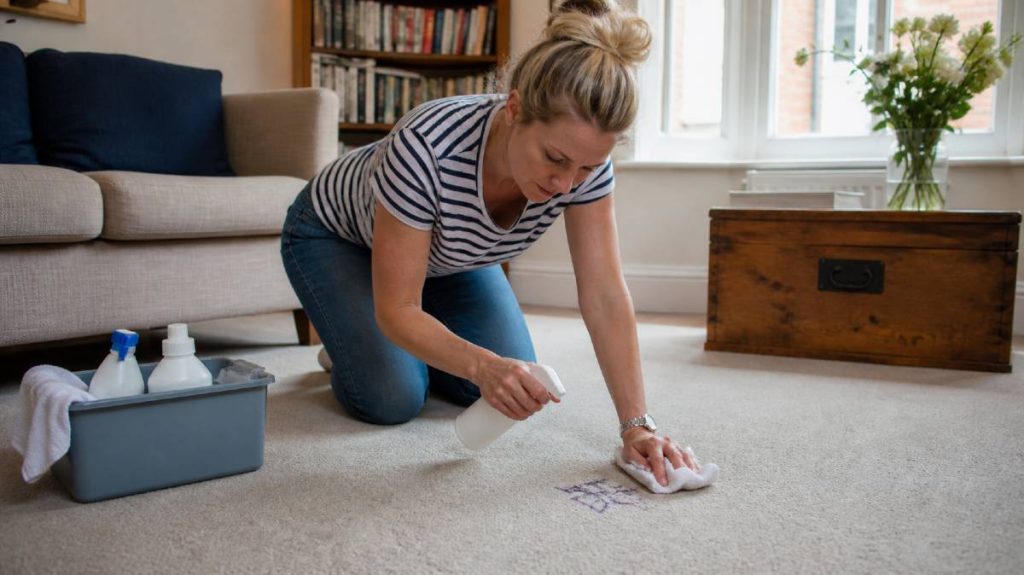
You turn around for thirty seconds and somehow a permanent marker has made its way onto your carpet. It happens more than you’d think, usually involving a child, a craft project, or a lid that wasn’t on properly. The word “permanent” does a lot of heavy lifting here, and it’s easy to assume the stain is exactly that. It isn’t, not always.
What you do in the next few minutes matters more than which product you reach for. And knowing what’s actually in the ink, and what your carpet is made of, is the difference between lifting the stain cleanly and making it considerably worse.
This guide walks you through exactly what works, why it works, and how to match the method to your carpet type.
- Identify your carpet fibre type before applying any cleaning solution.
- Rubbing alcohol is the most effective first option for most carpet types.
- Always blot, never rub — rubbing pushes pigment deeper into the pile.
- Test any solution on a hidden area of carpet before applying it to the stain.
- Nylon carpets can tolerate stronger solutions; wool needs a much gentler approach.
- A white vinegar and baking soda solution works as a reliable homemade alternative.
- Persistent stains on delicate fibres are worth handing over to a professional.
How to Remove Permanent Marker from Carpet
Blot the stain immediately with a dry cloth to lift as much pigment as possible, then apply rubbing alcohol to the area using a clean cotton ball or cloth. Work from the outside of the stain inward, using a dabbing motion rather than scrubbing. Rinse with cold water, blot dry, and repeat if needed. This method works on most synthetic carpet fibres and handles fresh stains particularly well.
The reason rubbing alcohol works is chemistry, not effort. Permanent marker ink is alcohol-based, which means it was designed to bond quickly and resist water. An alcohol solvent re-dissolves the pigment so it can be lifted out of the fibre rather than just pushed around. Water alone does almost nothing, because it doesn’t interact with the same compounds.
That said, the method isn’t identical for every carpet. Wool is sensitive to high-pH solutions and aggressive scrubbing. Polyester can handle gentle alcohol application but won’t thank you for anything harsh. The method above works as a starting point, but the section below breaks it down by fibre type so you can be more precise.
Does Carpet Fibre Type Really Change What You Should Use?
Yes, significantly. The wrong solution on the wrong fibre can strip colour, distort the pile, or leave behind a residue that attracts more dirt than the original stain. Knowing what you’re working with before you open anything is genuinely important.
- Wool — Sensitive to water and high pH. Avoid alkaline cleaners and aggressive scrubbing. Use mild, pH-neutral solutions and as little moisture as possible.
- Nylon — Durable and resilient. It can tolerate higher-pH solutions and light scrubbing, which makes it the most forgiving carpet type to work with.
- Polyester — Naturally stain-resistant to a degree, but requires gentle solutions. Alcohol-based cleaners are fine in small amounts; avoid anything heavily alkaline.
- Olefin — Sensitive to heat, so stick to lukewarm solutions. Responds reasonably well to alcohol-based cleaning when used carefully.
Wool is the one that catches people out most often. It looks robust and it’s usually quite thick underfoot, but chemically it’s the most delicate of the lot. High-pH cleaners like ammonia or strong alkaline detergents can cause the fibres to felt — essentially causing them to mat together and shrink — or lose colour in patches. If your carpet is wool or a wool blend, be conservative. Less product, more patience.
Nylon, on the other hand, is built for durability. It gives you the most room to work with, which is fortunate because it’s also one of the most common fibre types in Australian homes. If you’re going to try a slightly stronger solution, nylon is where that’s least likely to go wrong.
Which Method Should You Try First?
Start with rubbing alcohol if you have it and the carpet is synthetic. If the carpet is wool or olefin, or you don’t have alcohol to hand, go straight to the vinegar and baking soda approach. Both are worth knowing properly.
Here’s what you’ll need:
- For the rubbing alcohol method:
- Rubbing alcohol (isopropyl)
- Clean white cloths or cotton balls
- Cold water
- Dry towel
Here’s what you’ll need:
- For the vinegar and baking soda method:
- White vinegar
- Baking soda
- Spray bottle
- Clean white cloths
- Cold water
- Dry towel
Using Rubbing Alcohol
- Soak a cotton ball or clean white cloth with rubbing alcohol
You want it damp, not dripping. Excess liquid can spread the stain further into the pile before it has a chance to lift it.
- Gently blot the stained area
Start at the outer edge of the stain and work inward. This stops you pushing pigment outward and widening the affected area.
- Apply light pressure only
Scrubbing forces the ink deeper into the fibres and can distort the pile. Blotting lifts it. Keep the motion controlled and deliberate.
- Rinse with cold water and blot dry with a clean cloth
Once the pigment has lifted, rinse to remove any alcohol residue. If a faint mark remains, repeat the process once more before moving on.
Rubbing alcohol evaporates quickly, which is actually helpful here. It reduces the risk of over-wetting the carpet backing, which can cause mould to develop if moisture sits for too long. Still, don’t drench the area. A little goes further than you’d expect.
Homemade Vinegar and Baking Soda Solution
- Mix equal parts white vinegar and cold water in a spray bottle. White vinegar is mildly acidic, which helps break down the pigment compounds without the harshness of a solvent.
- Sprinkle baking soda directly onto the stain first. This creates a gentle abrasive surface and helps absorb some of the ink before you introduce any liquid.
- Spray the vinegar mixture onto the baking soda. It’ll fizz. That reaction helps lift particles away from the fibres rather than pushing them further in. Let it sit for two to three minutes.
- Gently blot the area and rinse with cold water. Work from the outside in, as always. Once the area is clear, blot with a dry cloth to remove as much moisture as possible.
This method is gentler than alcohol and suits wool or olefin carpets better. It won’t shift a heavy, fully dried stain on its own, but for a fresh mark or a stain that’s already been partially treated, it’s a reliable option. The vinegar smell dissipates once the carpet dries, so don’t let that put you off.
What Technique Mistakes Make Stain Removal Worse?
Getting the method right matters, but technique is what separates a clean result from a frustrating one. These are the habits worth building from the start.
- Always blot from the outside of the stain toward the centre. Working inward stops the pigment from spreading and gives you a smaller, more manageable area as you go.
- Keep the room ventilated whenever you’re using solvent-based solutions. It’s a basic precaution, but an easy one to skip when you’re focused on the stain.
- Use a hairdryer on its lowest heat setting to dry the area once you’re done. This speeds up drying and reduces the risk of moisture sitting in the carpet backing for too long.
- Apply a carpet protectant spray once the area is clean and fully dry. It won’t make the carpet indestructible, but it gives you more time to deal with future spills before they bond to the fibre.
One thing worth repeating: the faster you act, the better your result. Permanent marker ink is designed to dry and bond quickly. A stain you catch in the first few minutes is significantly easier to lift than one you find an hour later. If you’ve discovered it after the fact, you’ll likely need more than one round of treatment. Work through it methodically rather than applying more pressure or more product out of frustration. More product doesn’t equal faster results. It usually just means a wetter carpet.
When DIY Has Done Everything It Can
Some permanent marker stains won’t shift with home methods, and that’s not a reflection of the effort put in. It’s a reflection of how the ink has bonded to the fibre over time, particularly if the stain has had hours or days to set, or if the carpet is a pale colour where even faint residue is visible.
Professional carpet cleaning works at a different level to a cloth and a bottle of alcohol. The extraction equipment, solution temperatures, and process are calibrated in a way that household products simply can’t replicate. A professional carpet cleaning service works through the full carpet structure, removing embedded residue and refreshing the pile across the entire surface rather than treating one isolated patch.
Wool carpets deserve a particular mention. They’re expensive, they’re delicate, and they respond badly to mistakes. If you’ve got a permanent marker stain on a wool carpet and you’re not confident in the approach, the cost of a professional visit is considerably less than the cost of replacing the carpet. That calculation tends to make itself.
Frequently asked questions
Rubbing alcohol is generally safe on synthetic carpet fibres (nylon, polyester, olefin) when applied in small amounts and blotted rather than poured. It can affect colour or texture on wool or wool-blend carpets. Always test on a hidden section first and allow it to dry before treating the visible stain.
Acetone-based nail polish remover can dissolve permanent marker ink, but it carries a higher risk of stripping carpet dye and damaging synthetic fibres than rubbing alcohol does. It is not recommended as a first option. If rubbing alcohol is unavailable, the vinegar and baking soda method is a safer alternative for most carpet types.
Hydrogen peroxide (3% solution) can lighten permanent marker stains on light-coloured or white carpets, but it carries a real risk of bleaching the carpet fibres and should not be used on dark, patterned, or wool carpets. If you use it, test on a hidden area first and rinse thoroughly with cold water afterwards.
Not sure your carpet stain will come out?
The professional carpet cleaners can help!
Conclusion
Permanent marker stains are removable in most cases, provided you act quickly, match the method to the fibre type, and blot rather than scrub. The chemistry is on your side once you understand what the ink is actually made of and what breaks it down.
If the stain has resisted every sensible attempt, or the carpet is one you can’t afford to risk, that’s not failure. That’s just the point where the right tools for the job are no longer in your kitchen cupboard.