Last update: 5 days ago
Your shower head works hard every single day. But when the water pressure starts dropping or the spray goes sideways instead of straight, that’s your shower head quietly asking for attention. Limescale and mineral deposits build up over time, especially in areas with hard water, and they’re almost always the cause. The fix is simpler than most people expect, and this guide walks you through exactly how to do it properly.
There’s a lot of conflicting advice out there about cleaning shower heads with vinegar, so let’s clear it up properly, including what works, what doesn’t, and what could actually damage your fixture.
TL;DR
- Soaking your shower head in white vinegar for 30 minutes to overnight dissolves limescale effectively.
- White vinegar is the best choice for descaling because of its consistent acidity.
- Vinegar is safe for most shower head materials but can damage certain finishes.
- Clean your shower head every one to three months depending on your water hardness.
- Lemon juice and baking soda are good alternatives if vinegar isn’t suitable for your finish.
- A quick wipe after each use slows limescale build-up between deep cleans.
How Do You Clean a Shower Head with Vinegar?
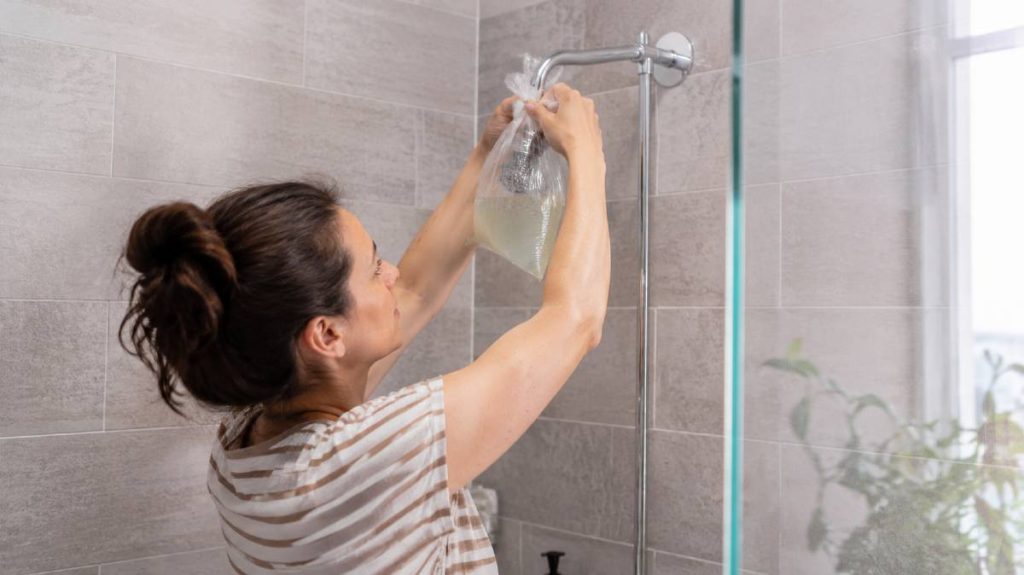
To clean a shower head with vinegar, fill a plastic bag with undiluted white vinegar, submerge the shower head nozzles in it, and secure the bag with a rubber band or zip tie. Leave it for at least 30 minutes for light build-up, or overnight for heavy limescale. Remove the bag, scrub the nozzles with an old toothbrush, then run the shower on hot for a minute to flush everything out.
That’s the short version. Here’s how to do it properly, depending on what you’re dealing with.
Here’s what you’ll need:
- White vinegar (at least 500ml)
- A sturdy plastic bag large enough to fit over your shower head
- A rubber band, zip tie, or a piece of string
- An old toothbrush or small scrubbing brush
- A microfibre cloth for drying
Method 1: The bag soak (shower head stays on)
This is the most straightforward method, and it works well for most people.
- Fill the bag with white distilled vinegar. Pour enough to fully submerge all the nozzles on the shower head face. White vinegar works best here because its acetic acid content (typically 5%) is strong enough to dissolve limescale and mineral deposits without damaging the finish.
- Position the bag over the shower head. Lift it up so the entire face — every nozzle — sits completely submerged in the vinegar. If any nozzles are above the liquid line, they won’t get treated.
- Secure the bag tightly with a rubber band. Wrap it firmly around the arm or neck of the shower head. It needs to hold the weight of the vinegar without slipping, so double the band if needed.
- Leave it to soak. For light build-up or routine maintenance, 1-2 hours is enough. For heavy limescale — the kind that’s visibly blocking nozzles or reducing water pressure — leave it overnight (6–8 hours).
- Remove the bag carefully. Vinegar has a strong smell, so open a window or turn on the extractor fan before you take it off. Dispose of the used vinegar down the drain.
- Scrub the nozzles with a toothbrush. Work the bristles firmly into each nozzle hole to dislodge any deposits the vinegar has loosened. Rubber nozzles (common on modern shower heads) can simply be rubbed with your finger to break up residue.
- Run the shower on hot for 60–90 seconds. This flushes out any loosened debris from inside the shower head and clears the nozzles from the inside out.
- Wipe the face dry with a cloth. This removes any remaining vinegar residue and leaves the surface clean. A microfibre cloth works best and won’t scratch the finish.
Method 2: Detach and soak
If you have a removable shower head, this method gives you a more thorough clean.
- Unscrew the shower head from the hose or wall fitting. Wrap the joint with a cloth first to protect the finish from your spanner if it’s on tight.
- Place it face down in a bowl or container filled with undiluted white vinegar.
- Leave it to soak for one to three hours.
- Scrub all over with your toothbrush, paying close attention to the nozzle holes.
- Rinse thoroughly under the tap, then reattach
Are There Alternatives to Vinegar for Cleaning a Shower Head?
Yes. If vinegar isn’t suitable for your finish or you simply don’t have any, lemon juice, baking soda, and a combination of the two can all get results, depending on what you’re dealing with.
Lemon juice
Lemon juice contains citric acid, which works on limescale in a similar way to vinegar. It’s gentler, smells much better, and is a reasonable option for lighter build-up. Squeeze several lemons and use the juice directly in place of vinegar, following the same bag-soak method. The main downside is cost. You’ll need a fair bit of it to fill a bag, and buying that many lemons adds up. For occasional light cleans, it’s a perfectly fine swap.
Baking soda paste
Baking soda works differently. It’s a mild alkali and a gentle abrasive, so it’s more useful for surface grime and discolouration than for dissolving thick limescale. Mix it with a small amount of water to form a paste, apply it to the shower head face with an old toothbrush, scrub firmly, then rinse. You can combine it with lemon juice for a bit of fizzing action that helps lift deposits.
Adding essential oils
Essential oils won’t dissolve limescale on their own, but a few drops of tea tree oil added to your vinegar or lemon solution helps deal with any mould or bacteria that might be lurking around the nozzles. Eucalyptus works similarly. It also makes the whole process considerably more pleasant to carry out.
How Often Should You Clean Your Shower Head?
You should clean your shower head every one to three months. In hard water areas like London or the south-east of England, lean towards monthly or every six weeks. In softer water regions like Scotland or Wales, every two to three months is usually fine. A quick visual check every few weeks takes seconds and tells you whether things are building up sooner than expected.
The signs are pretty obvious once you know what to look for. Uneven spray, reduced pressure, or visible white crusty deposits around the nozzles all mean limescale is accumulating. Don’t wait until the shower is noticeably underperforming. By that point, the build-up is heavier and takes longer to shift.
For day-to-day upkeep between deep cleans, a quick wipe of the shower head face with a damp cloth after use makes a real difference. It takes about ten seconds and stops mineral deposits from drying on and hardening. It’s one of those habits that feels pointless until you notice you’ve barely needed a full clean in months.
If keeping on top of routine bathroom cleaning feels like one more thing on a very long list, a regular domestic cleaning service covers the regular upkeep of your home on a schedule that works around you.
Can Vinegar Damage Your Shower Head?
Vinegar can damage certain shower head finishes if left in contact for too long. Nickel, brass, and gold-toned finishes are the most vulnerable. The acetic acid that makes vinegar such an effective descaler can also etch or discolour these surfaces with prolonged exposure. Standard chrome and stainless steel shower heads handle it without any issue.
It’s worth knowing what your shower head is made of before you leave it soaking overnight. Most modern shower heads sold are chrome-plated or plastic, and both are fully safe with vinegar. If yours has a brushed nickel, oil-rubbed bronze, or antique brass finish, be more cautious.
Many shower heads have flexible rubber nozzles designed to make cleaning easy. You can literally rub them with your finger, and the deposits flick straight off. For these, a shorter vinegar soak followed by a quick rub-down is all you need. The rubber itself is completely unaffected by vinegar, so no concerns there.
Need help with house cleaning?
Hire the professional for regular cleaning
Conclusion
Cleaning your shower head with vinegar is one of the simplest, most effective things you can do to keep your bathroom running properly. It costs next to nothing, uses something you likely already have, and genuinely restores water flow and spray quality when limescale has crept in. Whether you go for a full overnight soak or a quick 30-minute bag method, the process is hard to get wrong.
Clean every one to three months, depending on your water hardness, take care with delicate finishes, and keep a wiping habit going between proper cleans. A small bit of regular attention, and your shower head will give you no trouble at all.