
Last update: 2 weeks ago
A smelly dishwasher is almost always caused by food build-up, mould, or a drainage issue — and the good news is it’s fixable in under an hour. If your dishwasher smells bad, you’re far from alone: it’s one of the most common kitchen complaints, and it tends to creep up precisely because we expect the machine to clean itself. It doesn’t — but a quick deep clean will sort it. We’ve also been known to remember setting the oven to a self-cleaning cycle before we think of the dishwasher, so consider this your reminder.
Why does your dishwasher smell?
A dishwasher smells bad for one of four reasons: trapped food and grease, mould or mildew on the seals, standing water in the filter or drain, or limescale build-up from hard water. Identifying which one you’re dealing with makes the fix a lot faster.
1. Food debris and grease build-up → general bad or stale smell. Tiny particles of leftover food accumulate in the filter and the crevices of the machine over time. That organic matter breaks down, and the smell gets into your dishes during the drying cycle. This is the most common cause — and the most straightforward to fix.
2. Mould or mildew on the door seals and interior → musty smell. The rubber gasket around the door stays damp after every cycle and rarely dries out completely. That makes it a prime spot for mould to take hold, which gives off that distinct musty odour. A quick wipe with a cloth during your regular clean keeps it in check.
3. Standing water in the filter or drain → sewage or rotten-egg smell. If water isn’t draining properly — because the filter is clogged or the drain hose is kinked — it sits in the bottom of the machine and starts to smell like a drain. This is the cause behind that sulphur or sewage odour that tends to alarm people the most. See the dedicated section below if this sounds like your situation.
4. Hard water and limescale → mineral or chemical smell. Most dishwashers feature plastic interiors rather than stainless steel. Plastic is porous — it absorbs dirt, mildew, and odours over time. When you’re also dealing with hard water, calcium and magnesium deposits clog the machine and accelerate build-up, compounding whatever smell is already developing. A water softener (most dishwashers include one) is the right long-term fix here.
How to deep clean a dishwasher
Isn’t it funny how the thing that’s supposed to make your plates sparkle can end up needing a good scrub itself? Over time, all that greasy water and tiny scraps of leftover food sneak into corners you’d never think to check. Before you start, grab everything listed below — having it all ready saves you rummaging mid-clean.
Here’s what you’ll need:
- White vinegar
- Bicarbonate of soda
- Soft-bristled brush
- Toothpick or thin wire
- Cloth or sponge
- Dishwasher-safe bowl
- Empty it and pull out the bottom rack
First things first, clear out every plate and mug from the dishwasher. Then slide out the bottom rack so you can actually see what’s hiding underneath. That’s where all the sneaky grime and murky bits like to hang out, waiting for someone to finally notice them.
- Clean the filter
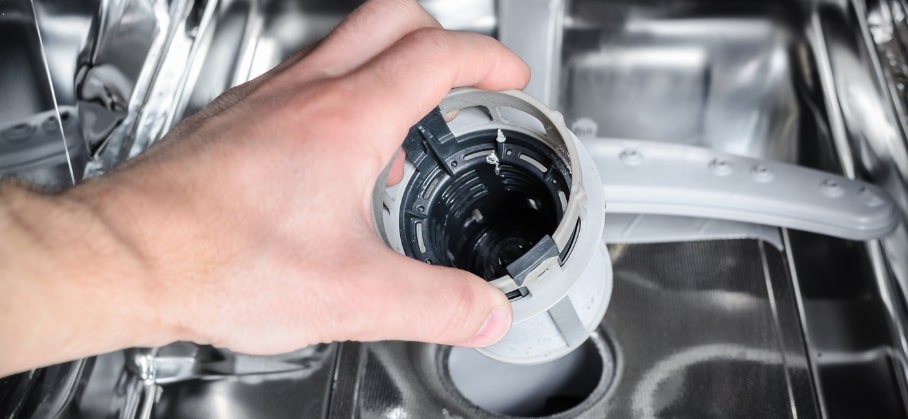
Down at the bottom, you’ll find the filter — usually something you can twist or lift out. Pop it under the tap and rinse it with warm water. A soft-bristled brush works wonders here, especially for getting rid of greasy gunk and stubborn food bits. Once it’s clean, water can flow properly again.
- Wipe around the drain
Now that the filter is out of the way, clean the drain and the bottom of the dishwasher with a cloth or sponge. This little spot loves to gather all kinds of slimy gunk, which is most likely what makes your dishwasher smell bad. It’s not the most exciting job, but it only takes a minute and makes a huge difference right away.
- Check the spray arms
Those spinning arms are what actually fling water around inside the dishwasher. Take a quick look at the little holes along them. If any are clogged with food or limescale, gently poke them clear with a toothpick or thin wire. When they’re free, water can reach every plate, glass and corner properly.
- Clean the door seals and edges
Dip a cloth into warm, soapy water and wipe along the rubber seals, hinges and the inside edges of the door. You might be surprised what turns up here — bits of grime, soap scum and sometimes even a little mould. A quick wipe keeps everything fresher and helps the door seal tightly.
- Put vinegar in the machine
Place white vinegar in a dishwasher-safe bowl and put it on the top rack. Don’t put anything else in the bowl. Run a hot cycle — the vinegar breaks down grease and limescale and clears out any lingering smells. It’ll already look and smell much better when it’s done.
- Add bicarbonate of soda to finish
Sprinkle a cup of bicarbonate of soda across the bottom of the dishwasher and run a short hot cycle. This is the finishing touch — it tackles any remaining residue and leaves a clean, fresh smell behind.
Can you run bleach in the dishwasher?
No — bleach damages rubber seals, gaskets, and metal parts, and can produce toxic fumes when mixed with dishwasher detergent residue. Use white vinegar and bicarbonate of soda instead. They’re safer, cheaper, and genuinely effective.
Thinking about running bleach through your dishwasher anyway? It might seem like a quick fix, but bleach is actually pretty rough on your machine. Over time, it eats away at rubber seals, gaskets, hoses, and even metal parts. Before you know it, you’re dealing with leaks — or, worse, a total dishwasher meltdown.
And it’s not just about slowly wrecking your appliance. If bleach mixes with leftover detergent or anything acidic sitting in the bottom, it can create some seriously nasty fumes — not the kind you want wafting through your kitchen while you’re trying to enjoy your morning coffee. Most major dishwasher manufacturers — including Fisher & Paykel, Bosch, and Miele — explicitly advise against using bleach inside their machines for exactly these reasons.
How to stop dishwasher smelling — and keep it that way
The best way to stop your dishwasher smelling is to build a few small habits into your routine. None of these take more than a minute — but skipping them is exactly how you end up back at square one. Here’s what actually works:
- Clean the filter monthly. A clogged filter is the most common reason a dishwasher smells — rinse it under warm water with a soft brush once a month to keep food build-up from taking hold.
- Rinse dishes before loading them. Scrape off large pieces of food before they go in — they’re what clog the drain and filter fastest.
- Don’t run the kitchen tap while the dishwasher is filling. Drawing water from both at once reduces the dishwasher’s water pressure, which means food debris is less likely to get fully flushed through and more likely to settle in the machine’s gaps.
- Use the built-in water softener. If your water is hard — high in calcium and magnesium — limescale builds up faster and accelerates odour problems. Most dishwashers include a water softener compartment for exactly this reason; keep it topped up with dishwasher salt.
- Leave the door ajar after a cycle. Letting air circulate inside the machine after a wash allows the interior to dry completely and stops mould and mildew from forming on the door seals — the main cause of a musty smell.
- Practice prevention combined with regular deep cleaning of the machine, and you should be able to banish the bad odours for good.
Do you need a helping hand?
Hire a professional cleaning team!
Dishwasher smells like sewage: what to check
A sewage or rotten-egg smell coming from your dishwasher almost always means water isn’t draining properly. When water sits in the bottom of the machine — because the filter is blocked or the drain hose is kinked or clogged — it starts to decompose and produces that distinctive sulphur odour. It’s unpleasant, but it’s usually fixable without calling a plumber.
Start by removing and thoroughly cleaning the filter (Step 2 above). Then check the drain hose — it runs from the dishwasher to the sink drain or waste outlet and should have a gentle upward loop before it connects, which stops water from siphoning back in. If the hose is kinked, twisted, or sitting in a low position that lets water pool, straightening it out often resolves the smell completely. If the issue persists after both fixes, the blockage may be further along in the sink drain itself — worth clearing that before assuming the dishwasher is at fault.
Frequently asked questions
Standing water trapped in a clogged filter or blocked drain hose is the usual culprit — it decomposes and produces a sulphur or sewage odour. Clean the filter thoroughly, then check that the drain hose isn’t kinked and has a proper upward loop before it connects to the waste outlet. Both fixes together usually clear the smell completely.
Once a month is the right interval for regular household use. If you run the machine every day, every two weeks is better. A quick rinse under warm water with a soft brush is all it takes — it’s the single most effective thing you can do to prevent odours from developing.
A persistent smell after cleaning usually means the door seals or spray arm holes still have trapped food or mould. Go back and focus specifically on wiping the rubber gasket around the door and poking out any blocked spray arm holes with a toothpick, then run a hot cycle with a cup of white vinegar in a dishwasher-safe bowl on the top rack.
Got a trick on your own? Share it with us in the comments below!