Last update: 20 hours ago
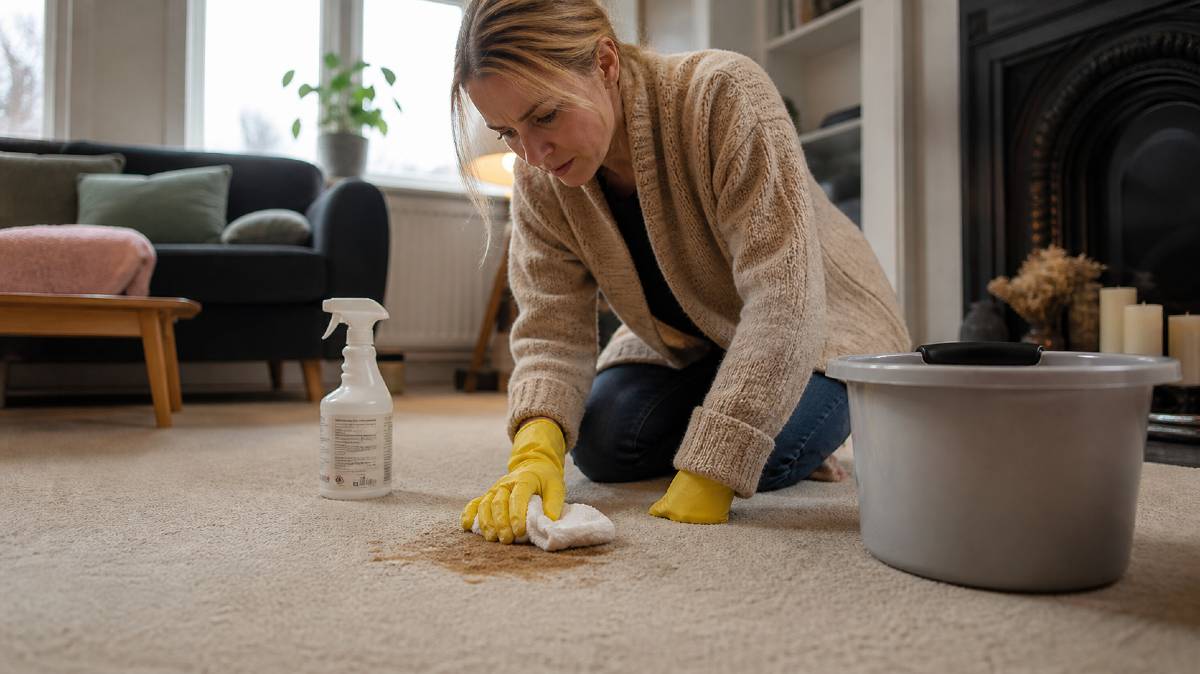
Vomit on carpet is one of those jobs nobody wants to deal with, but almost everyone faces at some point. The smell hits you first, then the sight of it, and your instinct is to grab whatever’s nearest and start scrubbing. That instinct is wrong, and it’ll make things worse.
Knowing how to clean vomit off carpet properly means understanding what you’re actually dealing with: an acidic, organic mess that bonds to fibres quickly and leaves behind a smell that can linger for weeks if you don’t address it the right way. This guide gives you the full picture, from the first thirty seconds to the final odour check.
TL;DR
- Act immediately, the longer vomit sits, the harder it is to remove fully.
- Blot, never scrub, scrubbing spreads the stain and pushes it deeper into the fibres.
- Baking soda is one of the most effective tools for both moisture absorption and odour neutralisation.
- Enzymatic cleaners break down organic matter at a molecular level and are the most reliable option for stubborn stains and smells.
- Vinegar solutions can neutralise odours but should be tested on a hidden area first.
- Set stains from dried vomit need rehydration before any cleaning solution will work effectively.
- Deep cleaning may be necessary if odour or discolouration persists after surface treatment.
Step-by-Step Guide for Cleaning Vomit from Carpet
Follow these steps in order. Skipping stages or rushing between them is what leads to stains that keep coming back and smells that won’t shift.
Remove Solid Matter First
Blot Up Excess Moisture
Apply Baking Soda to the Area
Apply Your Cleaning Solution
Blot the Cleaning Solution Out
Treat the Area with an Enzymatic Cleaner
Final Odour Treatment and Drying
Which Method Works Best for Removing Vomit from Carpet?
For fresh stains, baking soda and cold water work well immediately. For stains that have had time to sit, an enzymatic cleaner is the most reliable option because it breaks down the proteins and organic compounds rather than simply lifting surface residue. No single method suits every situation, the right choice depends on how fresh the stain is, what your carpet is made of, and what you have available.
| Commercial Cleaners | Homemade Solutions | |
|---|---|---|
| Effectiveness on fresh stains | High, formulated specifically for rapid action | High, baking soda and cold water work well immediately |
| Effectiveness on set stains | High, enzymatic options break down dried proteins | Moderate, may need multiple applications |
| Odour removal | High, enzymatic cleaners eliminate odour at source | Good, baking soda absorbs; vinegar neutralises |
| Cost | Higher upfront cost | Very low, household staples |
| Carpet safety | Varies, always check label for fibre type | Vinegar can affect some natural fibres, test first |
| Availability | Requires a trip to the shop or pre-stocking | Usually already in the cupboard |
Here’s how the individual methods break down:
- Blotting and baking soda. The fastest first response. After removing solids and blotting up moisture, cover the area generously with baking soda. It draws remaining moisture out of the fibres and begins absorbing odour immediately. Leave it for at least 15 minutes, longer if the stain is significant, then vacuum thoroughly.
- Enzymatic cleaners. The most effective option for both stains and odours, especially if the vomit has had time to sit. Enzymatic cleaners contain biological agents that break down the proteins, fats, and organic compounds in vomit at a molecular level rather than simply masking them. Apply, allow adequate dwell time per the product instructions, then blot and let dry. These are particularly worth having in a household with young children or pets.
- Vinegar solution. A diluted white vinegar solution (roughly one part vinegar to two parts cold water) is useful for neutralising the odour compounds left after initial cleaning. It’s not ideal as a primary cleaner because its acidity can affect some natural carpet fibres, but it’s effective at cutting residual smell once the bulk of the stain is gone. Always test on a hidden area first and rinse with cold water after.
- Washing-up liquid solution. A few drops of washing-up liquid in cold water creates a mild surfactant solution that helps lift stain residue from synthetic fibres. Apply sparingly, blot rather than scrub, and rinse thoroughly. Leaving soap residue in the carpet attracts dirt over time.
- Cold water rinse. Often overlooked but genuinely important. After any cleaning solution, rinsing with cold water prevents residue from building up in the fibres. Always use cold water, not warm. Heat helps set protein-based stains, which is the opposite of what you want here.
Why Does the Vomit Smell Keep Coming Back?
Because the odour has penetrated below the surface layer of the carpet and settled into the backing or underlay beneath. This is more common than people expect, and it’s not a sign that you did something wrong.
The volatile compounds responsible for the smell travel with moisture as it wicks downward. Once the surface dries, those compounds are still active lower down. They become noticeable again when the air warms up or humidity rises. That’s why a carpet can smell clean in the morning and unpleasant by afternoon.
Surface fresheners and scented sprays don’t solve this. They mask it temporarily, which makes the eventual return of the odour even more frustrating. You need something that either absorbs the odour compounds or breaks them down. Here’s what actually works:
- Baking soda overnight treatment. Apply a thick, even layer over the entire affected area and leave it for at least 8 hours. Baking soda is alkaline and neutralises the acidic odour compounds, while also absorbing residual moisture. Vacuum it up thoroughly in the morning. Repeat if necessary.
- Enzymatic odour eliminators. These work differently from air fresheners. The enzymes actively break down the organic molecules causing the smell rather than covering them. They need dwell time to work properly, so don’t blot or ventilate too quickly after application. For deep smells, a second application after 24 hours is often needed.
- White vinegar rinse. A diluted vinegar solution applied to the area and then blotted dry can cut through residual smell. The vinegar scent dissipates as it dries, taking some of the vomit odour with it. Not a standalone solution for severe cases, but useful as a supplementary step.
- Cold water extraction. If you have access to a wet-and-dry vacuum or a carpet cleaning machine, running cold water through the affected area and extracting it pulls dissolved odour compounds up and out from the deeper layers. This is the most effective home method for odour that has reached the backing or underlay.
If you’ve worked through all of this and the smell persists, the underlay may need to be dried out or replaced in that section. Professional carpet cleaning uses hot water extraction equipment to flush contamination out from the full depth of the carpet, which is considerably more effective than anything achievable with household tools.
How to Deal with Old or Dried Vomit Stains
Dried vomit is a different problem from fresh vomit. The proteins have set into the fibres, and the moisture that would have made cleaning easier is long gone. Cleaning solutions applied directly to dry, set staining have limited penetration and work slowly. The first step is always rehydration.
Apply a small amount of cold water to the affected area and allow a few minutes for it to soften the dried material. Then scrape up what you can gently, using a blunt tool rather than anything abrasive. Once the bulk of the dried residue is loosened and removed, you’re back to a stain-and-odour problem rather than a solid-matter problem, and the standard approach applies from that point.
Enzymatic cleaners are the most reliable option for old stains because they break down dried proteins that a basic surfactant solution won’t shift. Expect to apply, dwell, blot, and repeat more than once. Set stains take patience. Most will come out significantly, and many will clear completely, but the older the stain, the longer the process.
One thing that makes old stains harder is that people often apply heat in an attempt to dry or clean the area quickly. Hot water, steam, or direct heat sets protein-based stains permanently. Cold water only, throughout the entire process.
Tips for Reducing the Damage Next Time
You can’t always prevent the incident, but you can change how much damage it does. A bit of preparation means you’re not scrambling for something to use while the clock ticks down on a fresh stain.
- Keep an enzymatic cleaner in the cupboard. Having it ready means you can act within the first few minutes, which is when it makes the most difference. Buying one after the fact usually means dealing with a set stain instead of a fresh one.
- Consider a carpet protector treatment for high-traffic areas or rooms where young children spend time. Carpet protectors create a barrier on the fibres that slows down liquid absorption, giving you more time to respond before a stain sets.
- Keep a stock of old white cloths or a dedicated cleaning roll in a known location. Hunting for something absorbent in a panic wastes critical time.
- If someone is unwell, a waterproof mat or bowl nearby reduces the chance of carpet contact in the first place. It’s obvious, but it’s the most effective prevention there is.
- For households with pets, consider whether frequently used areas could benefit from a stain-resistant rug that can be taken outside and hosed down rather than fitted carpet that requires the full cleaning process every time.
Frequently Asked Questions
What household items can be used to clean vomit from carpet?
Does vinegar remove vomit smell from carpet?
Can baking soda remove vomit smell from carpet?
How long does vomit smell last on carpet if left untreated?
When should I stop trying to clean it myself?
Is your carpet still smelling after cleaning?
The professional carpet cleaning professionals can help!
Conclusion
Cleaning vomit off carpet is unpleasant, but it’s manageable if you know the right approach. Act quickly, blot rather than scrub, treat the stain and the odour as separate problems, and use cold water throughout. Most situations are fully recoverable with household materials and some patience.
Where people go wrong is rushing, or assuming the job is done when the visible stain disappears. The smell is the real test. Get that right, and your carpet will come through it clean.