
Last update: 6 months ago
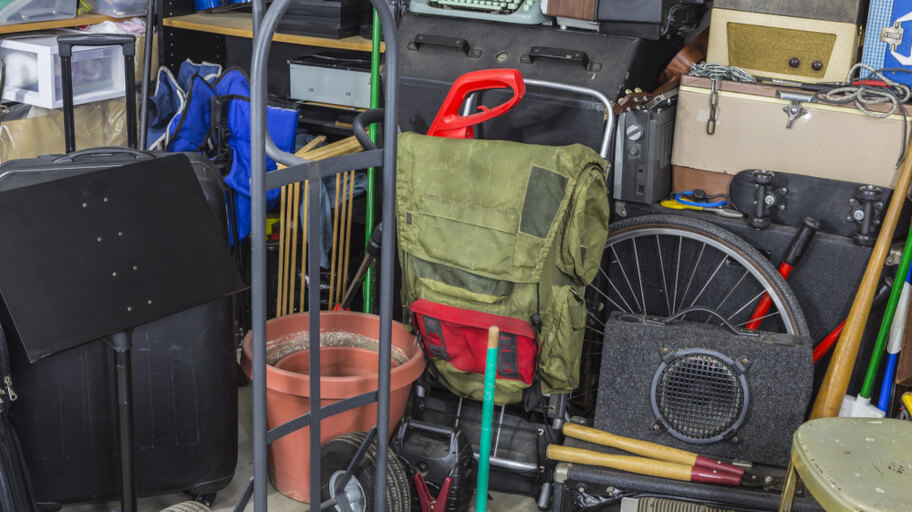
If your garage has turned into a dumping ground, you’re not alone. It starts small — a box, a broken chair, something you’ll “sort later”. Then one day you open the door and realise you can barely get in, never mind park the car.
It doesn’t happen all at once. It creeps in. Stuff gets pushed aside, stacked up, forgotten. Before long, it feels like too much… so you leave it.
Good news though — you don’t need a big overhaul or fancy storage. Just a simple plan on how to declutter the garage.
How to declutter and organise your garage
Right, this is where things actually start to come together. Nothing complicated here — just a clear process you can follow without second-guessing every move.
Step 1 – Empty the space or work in zones
If you’ve got the time and space, clearing everything out at once is the cleanest way to start. It gives you a proper blank slate and forces you to see exactly how much you’ve been holding onto.
That said, not everyone has a driveway big enough or a full day to spare. In that case, work in zones. One wall, one corner, one section at a time. It’s slower, but far more manageable — and you’re much more likely to stick with it.
The key is this: don’t try to organise around the clutter. You either clear it fully or isolate it properly. Half-measures just keep things messy.
Step 2 – Sort everything properly
Now that everything’s out in the open, it’s decision time.
Go item by item and place everything into your four categories: keep, donate, bin, or relocate. Don’t rush it, but don’t overthink it either. If something genuinely earns its place, keep it. If not, it goes.
This is usually where people slow down because every object suddenly feels important. It isn’t. Most of what’s in a cluttered garage is either unused, duplicated, or forgotten. Be honest about that.
And try to avoid “maybe” piles. They’re just delayed decisions that come back to haunt you later.
Step 3 – Be ruthless with what you get rid of
This is the step that makes the biggest difference — and the one people struggle with most.
You don’t need five half-working tools. You don’t need scraps of wood “just in case”. And you definitely don’t need boxes you haven’t opened in years.
If something has been sitting there untouched for a long time, there’s a reason. Keeping it won’t suddenly make it useful.
A good rule? If it’s broken, unused, or easily replaceable, it probably shouldn’t stay.
Step 4 – Deep clean the garage
Once the clutter is out of the way, take advantage of the space while you’ve got it.
Clean the floor properly. Get rid of dust, cobwebs, and whatever’s built up in the corners. Wipe down surfaces if needed. It doesn’t need to be spotless, but it should feel reset.
This step is often skipped, but it makes a surprising difference. A clean space is much easier to keep organised.
Step 5 – Set up simple storage systems
Now you rebuild — but this time with a bit of structure.
You don’t need anything fancy. Basic shelves, a few sturdy storage bins, maybe some wall hooks for tools. That alone can completely change how the space works.
The goal isn’t to make your garage look like a showroom. It’s to make things easy to find and easy to put back. If a system feels like effort, it won’t last.
Keep it simple, practical, and slightly boring if needed.
Step 6 – Put everything back with purpose
This is where most people undo all their hard work — by just throwing things back in.
Instead, think in zones. Tools in one area. Garden equipment in another. Seasonal items grouped together. Things you use often should be easy to reach. Things you rarely touch can go higher up or further back.
Give everything a “home”. It sounds basic, but it’s what stops clutter from creeping back in.
And once it’s all back in place, take a step back. You don’t need perfection — just a space that actually makes sense.
What to get rid of when decluttering the garage
This is the part where things either improve fast… or stay exactly the same.
Most garages aren’t full because of lack of space. They’re full because too many useless or forgotten items are being kept “just in case”. If you don’t deal with that mindset here, the clutter will creep straight back in.
So, here’s what usually needs to go:
- Broken tools and equipment — If it’s been sitting there waiting to be fixed for months (or years), it’s not getting fixed. It’s just taking up space.
- Old paint tins and chemicals — These tend to pile up quickly. Half-used, dried out, or long past usable. Check local council rules for disposal, but don’t keep them indefinitely.
- Duplicate items — You don’t need three hammers, five screwdrivers, and multiple sets of the same thing. Keep the best, get rid of the rest.
- Unused sports or hobby gear — If you haven’t touched it in years, be honest — you’re probably not going to. It’s just sitting there out of guilt.
- Random boxes you haven’t opened in years — This one’s simple. If you don’t even know what’s inside, it clearly hasn’t been important.
- Scrap materials “just in case” — Bits of wood, leftover tiles, odd fittings. Some are useful, most just pile up endlessly.
- Old garden equipment that no longer works — Rusty tools, broken pots, worn-out bits that you’ve already replaced.
- Anything that belongs somewhere else — A lot of garage clutter isn’t even garage-related. It’s just been dumped there.
The goal here isn’t to be extreme — it’s to be realistic. If something genuinely has a purpose and gets used, keep it. If not, it’s time to let it go.
How long does it take to declutter a garage?
Short answer? It depends, but it’s probably going to take longer than you think.
If your garage is only lightly cluttered, you might get through it in a few hours. A quick clear-out, a bit of sorting, job done. But that’s not the reality for most people. If things have been piling up for years, you’re realistically looking at a full day… or more likely, a full weekend.
And that’s not a bad thing.
Trying to rush it is where people go wrong. You start making lazy decisions, keeping things you shouldn’t, or skipping steps like cleaning and proper organisation. It feels quicker in the moment, but you end up with a half-done job that doesn’t really last.
A better approach is to break it up. Do a couple of hours at a time. One section per session. It’s far more manageable, and you’re less likely to burn out halfway through and abandon it altogether.
Also, expect it to look worse before it looks better. That’s completely normal. When everything’s pulled out and spread around, it can feel like you’ve made a massive mistake. You haven’t — you’re just in the middle of it.
If you stay consistent and don’t try to do everything perfectly, most garages can be properly decluttered and organised within a weekend or a few shorter sessions across the week.
The key isn’t speed. It’s actually finishing it properly so you don’t have to do it all over again in a few months.
How to keep your garage clutter-free afterwards
Getting the garage sorted is one thing. Keeping it that way is where most people slip.
The good news is, you don’t need a strict system or loads of effort to maintain it. You just need a few simple habits that stop things quietly building up again.
- Use the “one in, one out” rule — If something new comes into the garage, something else needs to go. It keeps things balanced without you having to think too much about it.
- Do a quick monthly reset — Ten minutes is enough. Walk in, scan the space, put things back where they belong, and deal with anything that’s starting to pile up.
- Stop using the garage as a dumping ground — This is the big one. If something doesn’t have a place, don’t just stick it in the garage “for now”. That’s exactly how clutter starts again. You want to be able to open the garage door, don’t you?
- Stick to your zones — Tools stay with tools, garden stuff stays together, seasonal items stay grouped. Once things start drifting, the mess follows quickly.
- Make it easy to put things away — If your system feels awkward or inconvenient, you won’t use it. Keep it simple so putting things back becomes automatic.
It’s not about being perfect. It’s about catching the small mess before it turns into the same situation you just fixed.
Takeaways
- Start small and keep it manageable — One section at a time is enough to build momentum
- Be honest about what you actually use — Most clutter comes from “just in case” items
- Follow a simple system, not a perfect one — Practical beats Pinterest every time
- Don’t rush the process — A proper job now saves you doing it again later
- Maintain it with small habits — A few minutes here and there keeps things under control
Need help around the house?
We’ll lend a hand!